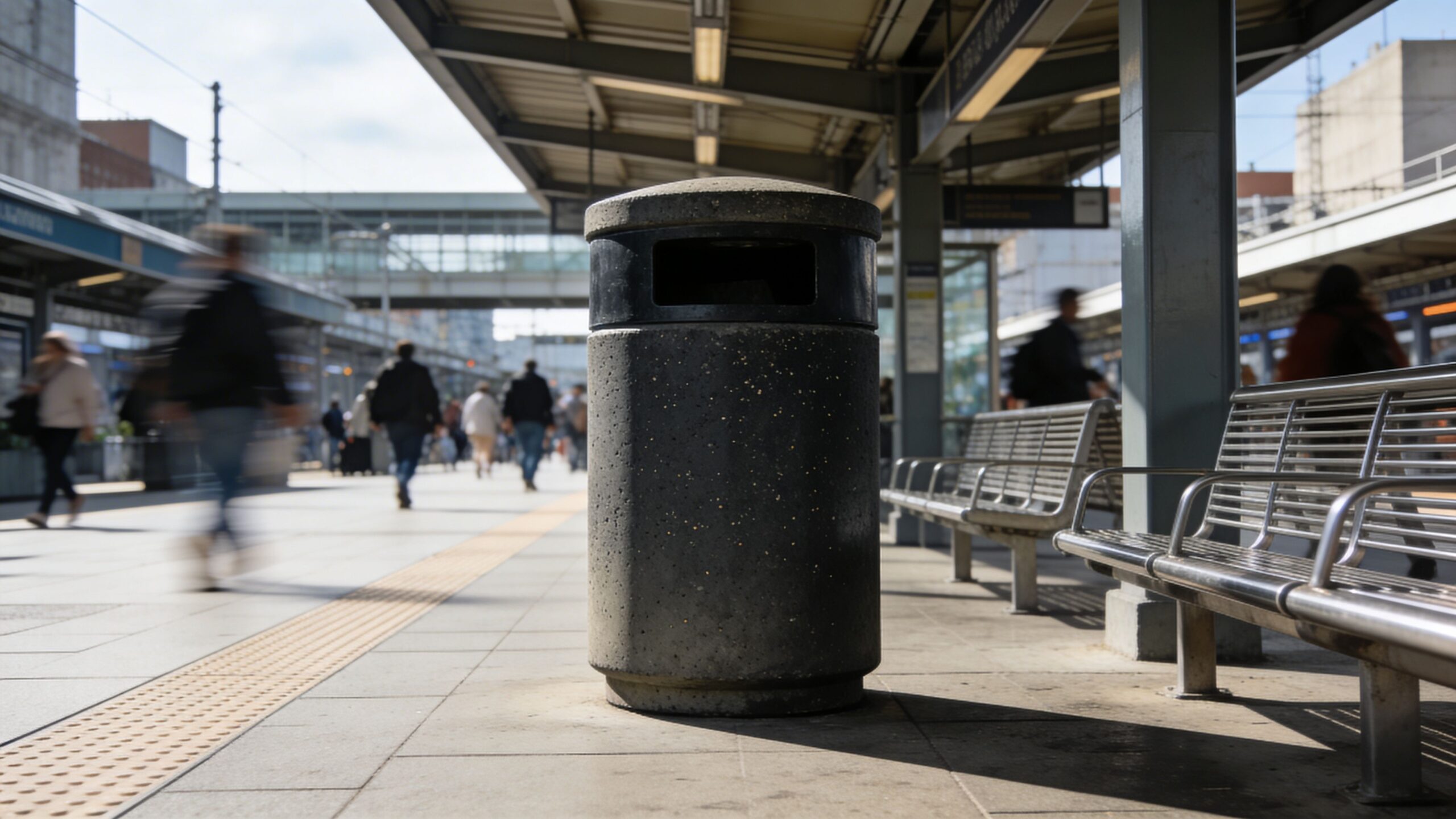
At first glance, the shape of a concrete trash can might seem like a minor design detail. After all, its primary purpose is straightforward: to collect waste efficiently and keep outdoor environments clean. But when you take a closer look, the choice between square and round concrete trash cans reveals a deeper conversation about functionality, durability, aesthetics, space optimization, and user experience. In public spaces, commercial properties, parks, campuses, and urban developments, even small design decisions can have a lasting impact.
A: Square concrete trash cans usually fit better in modern retail, office, and campus settings because they match straight architectural lines.
A: Round concrete trash cans often blend more naturally into parks and garden-style spaces because their shape feels softer and less rigid.
A: Square units usually use surrounding space more efficiently when placed against walls, curbs, or other straight site elements.
A: Round units can feel easier to navigate in open pedestrian areas because they have no protruding corners.
A: Not necessarily. Both can be very durable, though square corners may be more vulnerable to visible chipping if struck hard.
A: Often yes. Round interiors can make bag placement and debris removal a little simpler because there are no corners to trap waste.
A: Square bins are usually better for neat rows and organized layouts in high-traffic public environments.
A: Round bins often feel approachable from any direction, especially when installed in open plazas or gathering areas.
A: Maintenance depends more on liner design, lid type, and placement, though round interiors can sometimes be slightly easier to clean.
A: Square is usually better for clean alignment and modern layouts, while round is often better for softer aesthetics and all-side approachability.
Built for the Environment: Structural Strength and Durability Differences
Concrete, regardless of shape, is inherently strong. However, geometry plays a subtle but important role in how that strength is distributed. Round concrete trash cans are naturally efficient when it comes to structural integrity. The circular shape allows forces to be distributed evenly across the surface, reducing stress points. This makes round bins slightly more resistant to cracking under pressure or impact, especially in environments where they may be bumped or exposed to shifting ground conditions.
Square concrete trash cans, by contrast, introduce corners that can act as stress concentrators. While modern manufacturing techniques and reinforcement methods mitigate these issues, the presence of edges still creates points that are more susceptible to chipping or damage over time. That said, square bins are often built with thicker walls and reinforced corners, which compensates for this potential weakness.
In practical terms, both shapes are highly durable and suitable for outdoor use. However, in extremely high-impact environments or areas with frequent heavy use, round bins may offer a slight edge in long-term structural resilience. For most applications, the difference is not dramatic, but it becomes more relevant in demanding conditions.
Space Efficiency and Placement Strategy
One of the most noticeable differences between square and round trash cans is how they interact with space. Square bins are inherently more space-efficient when placed against walls, along pathways, or in corners. Their flat sides allow them to sit flush against surfaces, minimizing wasted space and creating a more organized layout. In urban environments where every inch matters, this can be a significant advantage.
Round bins, on the other hand, require more clearance. Their curved edges prevent them from fitting tightly into corners or against flat surfaces. This can lead to small gaps that reduce spatial efficiency, particularly in crowded areas. However, round bins excel in open spaces where placement is more flexible and less constrained by surrounding structures.
From a planning perspective, square bins are often preferred in structured environments such as sidewalks, plazas, and building perimeters. Round bins are better suited for parks, open courtyards, and landscaped areas where symmetry and flow are more important than maximizing space.
Aesthetic Appeal and Architectural Harmony
Design plays a crucial role in modern outdoor spaces, and the shape of a trash can can either complement or disrupt the overall aesthetic. Square concrete trash cans tend to align well with contemporary architecture. Their clean lines and geometric form mirror the shapes found in buildings, paving patterns, and urban infrastructure. This makes them a natural choice for modern developments, commercial properties, and cityscapes that emphasize sharp, structured design.
Round trash cans, by contrast, offer a softer, more organic appearance. Their curved form blends seamlessly with natural environments, making them ideal for parks, gardens, and recreational areas. They create a sense of flow and continuity that complements landscaping elements such as trees, pathways, and water features.
The choice between square and round often comes down to the design language of the space. If the goal is to create a sleek, modern look, square bins may be the better option. If the objective is to enhance a natural or relaxed atmosphere, round bins provide a more harmonious fit.
User Interaction and Accessibility
The way people interact with trash cans is an important consideration that is often overlooked. Shape influences how users approach, use, and perceive the bin. Round trash cans offer a consistent experience from any angle. Because they have no defined front or back, users can approach them from any direction and deposit waste without needing to orient themselves. This makes them particularly effective in high-traffic areas where movement is unpredictable.
Square trash cans, on the other hand, tend to have more defined sides and openings. This can guide user behavior, encouraging waste disposal from specific directions. In some cases, this is beneficial, as it helps organize foot traffic and maintain order. However, it can also create minor inefficiencies if users approach from less optimal angles.
Accessibility is another factor to consider. Round bins often feel more intuitive and approachable, while square bins can provide clearer visual cues about where to deposit waste. The best choice depends on the flow of people and the desired level of control over user interaction.
Maintenance, Cleaning, and Operational Efficiency
Maintenance is a critical aspect of any outdoor waste management system. The shape of a trash can can influence how easy it is to clean, service, and maintain over time. Round concrete trash cans typically have smoother interiors with fewer corners, which makes them easier to clean. Debris is less likely to accumulate in hard-to-reach areas, and liners can be inserted and removed with minimal resistance.
Square trash cans, with their defined corners, can sometimes trap debris and liquids, making cleaning slightly more challenging. However, many modern designs address this issue with removable liners and interior coatings that simplify maintenance. Additionally, the flat surfaces of square bins can make exterior cleaning more straightforward, particularly when dealing with graffiti or stains.
From an operational standpoint, the difference in maintenance requirements is relatively small. Both shapes can be managed effectively with proper design and routine care. The choice often comes down to the specific preferences of maintenance staff and the conditions of the environment.
Safety, Stability, and Public Use Considerations
Safety is always a priority in public spaces, and the shape of a trash can can influence how it interacts with its surroundings. Round bins, with their lack of sharp edges, are generally considered safer in high-traffic areas. They reduce the risk of injury from accidental contact and create a more forgiving presence in crowded environments.
Square bins, while still safe, introduce edges and corners that can pose a slightly higher risk of impact. This is particularly relevant in areas with children or heavy foot traffic. However, many designs incorporate rounded edges or beveled corners to minimize this risk.
In terms of stability, both shapes perform well due to the inherent weight of concrete. However, round bins may have a slight advantage in resisting tipping forces, as their shape distributes weight evenly in all directions. Square bins, with their flat sides, may be more susceptible to directional forces, although this is rarely a significant issue given their mass.
Cost, Customization, and Long-Term Value
Cost is always a consideration when selecting outdoor infrastructure. In many cases, the price difference between square and round concrete trash cans is minimal, as both require similar materials and manufacturing processes. However, customization options can influence cost.
Square bins often provide more opportunities for customization, including panel inserts, branding, and integrated features such as ash receptacles or recycling compartments. Their flat surfaces make it easier to add design elements and functional enhancements. This can increase their value in commercial or branded environments.
Round bins, while less customizable in some respects, offer a classic design that remains relevant across a wide range of applications. Their simplicity can be an advantage, reducing complexity and ensuring long-term usability.
When evaluating value, it is important to consider not just the initial cost, but also the lifespan, maintenance requirements, and suitability for the intended environment. Both shapes offer excellent long-term value when chosen appropriately.
Making the Right Choice for Your Outdoor Space
Choosing between square and round concrete trash cans is ultimately about aligning form with function. Each shape brings its own strengths to the table, and the best choice depends on the specific needs of the space. Square bins excel in structured environments where space efficiency, modern design, and customization are priorities. They are ideal for urban settings, commercial properties, and areas where organization and alignment matter.
Round bins, on the other hand, shine in open and natural environments where flow, accessibility, and aesthetic harmony are key. They provide a user-friendly experience and a timeless design that integrates seamlessly with outdoor landscapes.
In many cases, the decision is not about which shape is better in absolute terms, but which one is better suited to the context. By considering factors such as placement, user behavior, maintenance, and design goals, decision-makers can select a solution that enhances both functionality and visual appeal.
The Final Shape of Smart Outdoor Design
The debate between square and round concrete trash cans highlights a broader truth about design: even the simplest elements can have a meaningful impact when thoughtfully considered. Shape influences not only how a trash can looks, but how it performs, how it is used, and how it fits into its environment. As outdoor spaces continue to evolve, the importance of intentional design will only grow. Whether you choose the structured precision of a square bin or the smooth versatility of a round one, the key is to match the solution to the space. When form and function come together seamlessly, even something as ordinary as a trash can becomes a quiet contributor to a cleaner, more efficient, and more enjoyable environment.