Outdoor spaces deserve the same level of design consideration as interiors. From landscaped gardens and patio lounges to commercial walkways and public parks, every detail contributes to the overall experience. Yet waste management is often treated as an afterthought. Concrete trash bins for outdoor spaces are changing that narrative by combining durability, security, and architectural appeal into one powerful solution. Unlike lightweight plastic or thin metal containers, concrete outdoor trash bins are built to endure. They resist harsh weather, prevent tipping, discourage vandalism, and maintain a clean, polished look even in high-traffic environments. Whether placed in residential backyards, restaurant patios, office campuses, or municipal streetscapes, these bins serve a functional purpose while enhancing visual consistency. As outdoor living continues to grow in popularity, so does the demand for long-lasting, low-maintenance infrastructure. This complete buyer’s guide explores everything you need to know before investing in concrete trash bins, helping you choose the right style, size, and features for your space.
A: For stability and vandal resistance, yes. Metal can be lighter and easier to relocate, but may dent or walk off more easily.
A: Start with higher capacity (often 35–55 gallons) near food/seating and scale by how often staff can service it.
A: In windy, rainy, or pest-prone areas, a lid or rain-cap is strongly recommended to keep contents contained and drier.
A: Use bins with drainage/weep paths, raised liner bases, or rain-cap lids; avoid fully open tops in wet climates.
A: A rigid liner with solid handles that fits standard bags reduces tearing and speeds up bag changes.
A: Usually yes, but avoid blasting directly into seams or stripping topical coatings; mild detergent and rinsing works for routine cleaning.
A: Choose lidded designs, service more frequently in heat, and use liners that can be fully removed and washed.
A: Most are, but pick heights/openings that are easy to reach and place them along accessible routes without blocking pathways.
A: Often not due to weight, but anchoring can help on slopes, near water, or where vandalism is common.
A: Restricted openings, hooded tops, and placement near monitored/high-traffic areas can discourage oversized bag dumping.
Built to Endure: The Strength and Durability Advantage
The defining feature of concrete trash bins is their exceptional strength. Concrete is inherently heavy, solid, and resistant to impact, making it ideal for outdoor use in both private and public settings. Unlike plastic bins that crack under sun exposure or metal containers that rust over time, concrete maintains structural integrity in rain, snow, heat, and freezing temperatures.
One of the primary benefits of concrete outdoor garbage cans is stability. Their weight prevents tipping during high winds or accidental bumps, which is particularly valuable in open plazas, pool decks, and commercial properties. This stability also reduces the risk of spillage and litter scattering across the surrounding area.
Modern concrete mixtures often include fiber reinforcement or internal steel supports to improve crack resistance and longevity. When properly sealed, concrete also resists moisture penetration, helping to prevent surface deterioration during freeze-thaw cycles. For regions with extreme climates, this resilience is a major advantage.
The durability of concrete trash bins translates directly into long-term savings. Instead of replacing damaged or faded bins every few years, property owners can rely on a solution designed to last decades. This makes them a smart investment for homeowners, facility managers, and municipalities alike.
Style Meets Structure: Elevating Outdoor Aesthetics
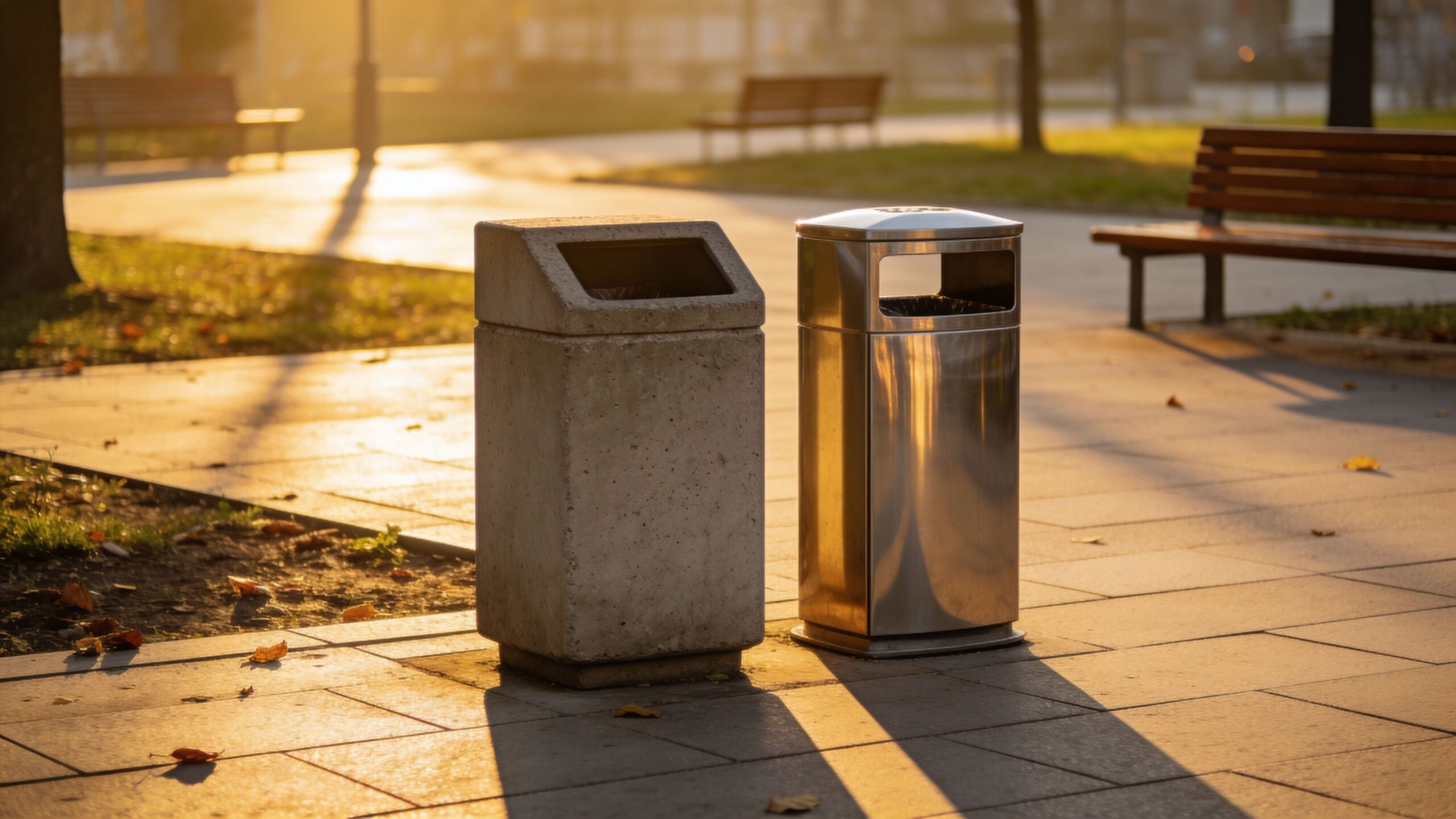
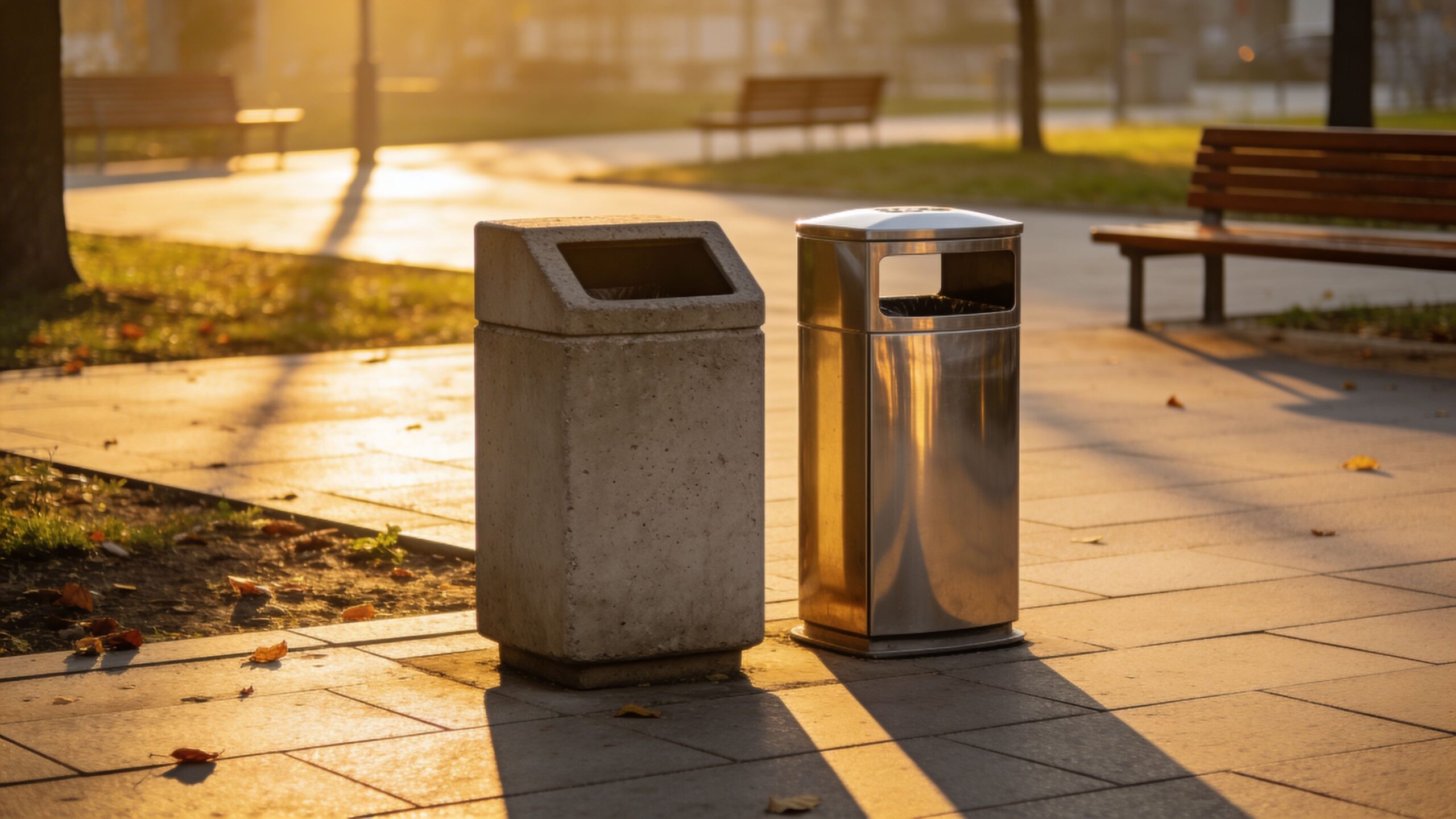
Concrete trash bins are no longer purely utilitarian. Today’s designs reflect architectural trends and blend seamlessly with modern outdoor environments. From minimalist smooth finishes to textured stone-like surfaces, concrete bins can complement a wide range of styles.
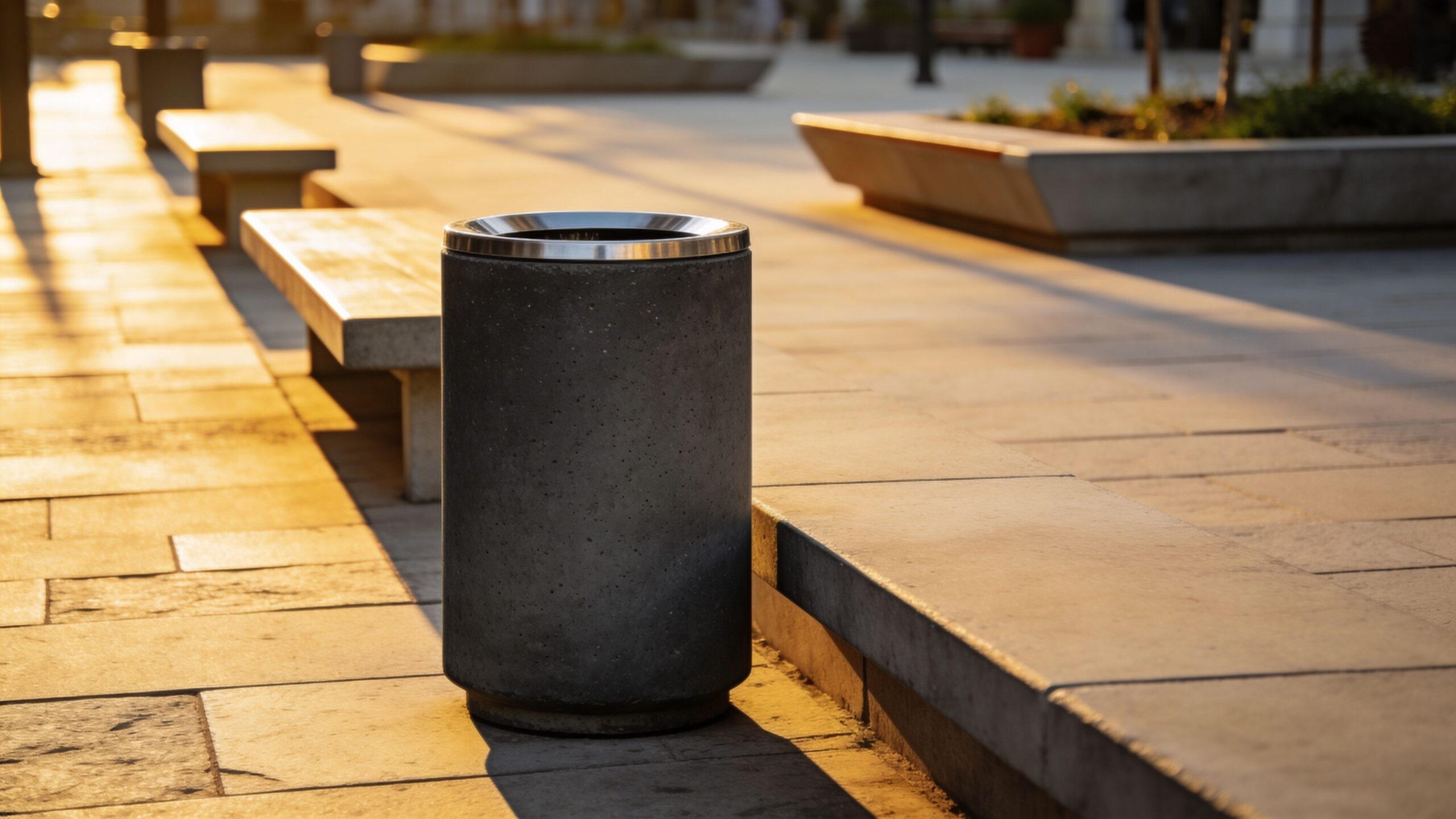
In contemporary settings, sleek rectangular or cylindrical bins with clean edges create a polished look. Neutral tones such as charcoal gray, warm sand, and light cement hues coordinate easily with patio furniture, planters, and walkways. These bins can be integrated into rooftop terraces, outdoor dining areas, and office courtyards without disrupting the design flow.
For more traditional or rustic environments, concrete trash receptacles can be textured or stained to resemble natural stone. This allows them to blend into landscaped gardens, historic districts, or park settings. Decorative aggregates and subtle color variations add visual interest while maintaining durability.
Because concrete can be molded into various shapes, customization options are extensive. Open-top, side-access, and domed-lid designs are all possible. Some models incorporate stainless steel liners or decorative metal accents, combining industrial strength with refined detail. The result is a trash bin that supports cleanliness without compromising aesthetic standards.
Choosing the Right Size and Capacity for Your Space
Selecting the appropriate size and capacity is one of the most important steps when buying concrete trash bins for outdoor spaces. Capacity needs vary depending on location, foot traffic, and intended use.
For residential patios or backyard spaces, smaller concrete trash bins with removable liners may be sufficient. These models typically hold enough waste for daily use without occupying excessive space. Their compact design allows them to fit neatly beside outdoor kitchens, grilling stations, or seating areas.
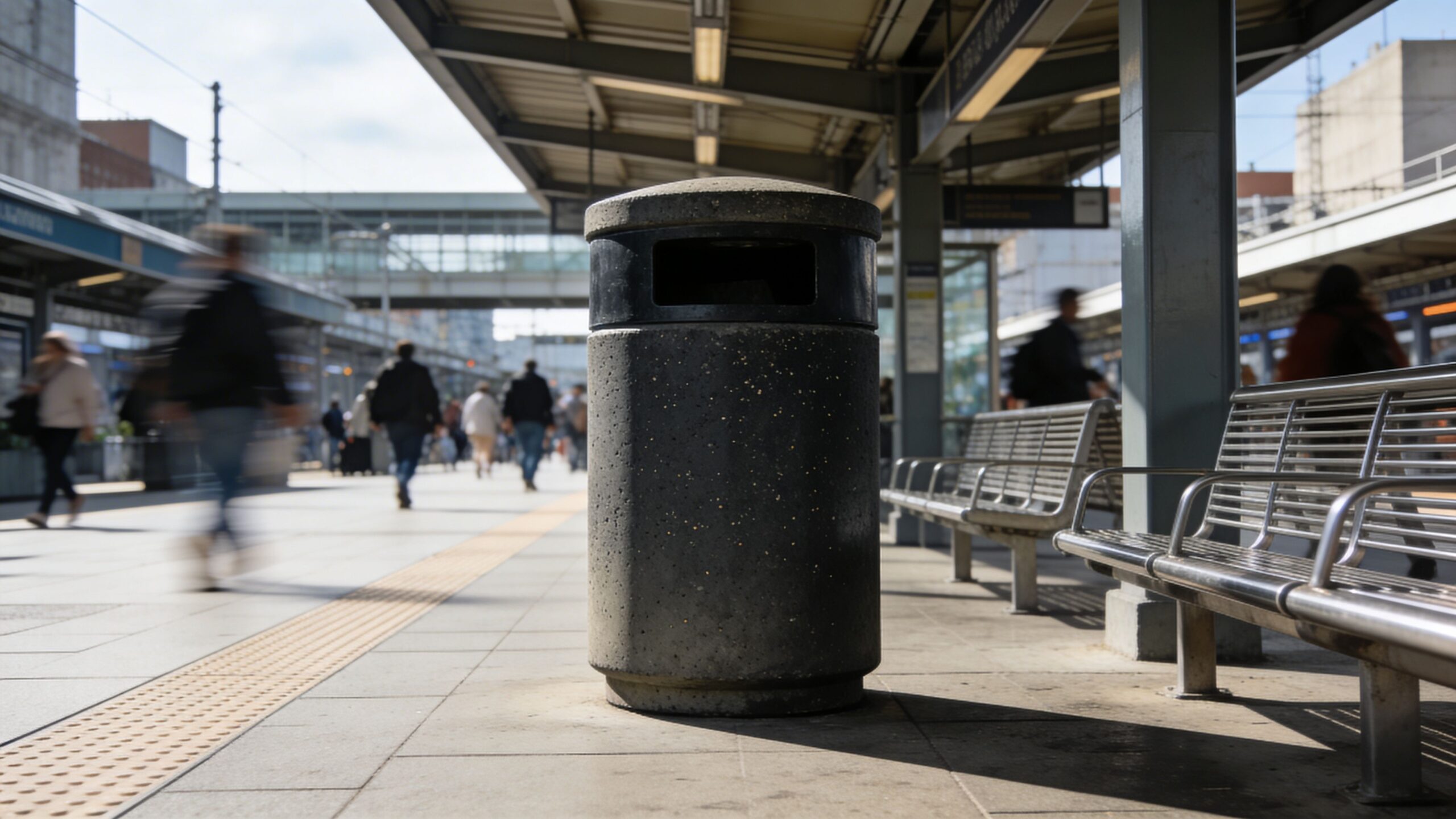
Commercial environments require greater capacity. Restaurants with outdoor seating, shopping centers, and office campuses benefit from larger concrete garbage cans that reduce the frequency of emptying. High-traffic public areas, such as parks or transit stations, may require oversized bins to handle peak usage.
Accessibility should also be considered. Open-top designs encourage quick disposal, while covered or hooded lids help contain odors and keep rainwater out. For areas where wildlife is a concern, secure lids or weighted covers can deter animals from accessing contents.
When evaluating capacity, think beyond volume alone. Consider how often maintenance staff will empty the bins, how far they must transport waste, and whether liners are compatible with standard trash bags. A thoughtful approach to sizing ensures both efficiency and convenience.
Maintenance Made Simple: Long-Term Care and Upkeep
One of the key advantages of concrete outdoor trash bins is their relatively low maintenance requirements. With proper sealing and occasional cleaning, they maintain their appearance and functionality for years.
Sealing is essential to protect the surface from stains and moisture absorption. A high-quality concrete sealant creates a protective barrier that resists discoloration from spills and weather exposure. Depending on environmental conditions, resealing every few years helps preserve durability and appearance.
Routine cleaning is straightforward. Mild soap and water typically suffice to remove dirt, pollen, and surface debris. Pressure washing can be used sparingly for deeper cleaning, though care should be taken to avoid damaging sealant layers.
Many concrete trash bins include removable inner liners made of plastic or metal. These liners simplify waste disposal and reduce direct contact between trash and the concrete shell. Regularly cleaning and replacing liners prevents odor buildup and extends the overall lifespan of the bin.
Compared to metal containers that require rust treatment or wooden enclosures that need refinishing, concrete offers a practical and low-effort maintenance solution. This simplicity makes it especially attractive for commercial properties and public facilities.
Security and Safety in High-Traffic Environments
Concrete trash bins provide more than durability and style. They also enhance safety and security in outdoor spaces. Their weight and stability reduce the risk of accidental tipping, which can create hazards in crowded areas.
In public settings, vandal-resistant construction is crucial. Concrete is far less susceptible to dents, graffiti damage, or theft compared to lightweight alternatives. Some models are designed with tamper-resistant lids or anchored bases for additional security.
Fire resistance is another important consideration. Unlike plastic bins that can melt or ignite, concrete is non-combustible. This makes it a safer option for environments where fire risk must be minimized, such as near barbecue stations or public event spaces.
For municipalities and property managers, these safety benefits translate into fewer incidents and lower maintenance costs. By choosing concrete trash bins for outdoor spaces, organizations invest in infrastructure that supports both cleanliness and public well-being.
Placement Strategies for Maximum Impact
The effectiveness of outdoor trash bins depends not only on their design but also on their placement. Strategic positioning encourages proper waste disposal and enhances overall organization.
In residential patios, placing a concrete trash bin near cooking or dining areas ensures convenience without disrupting aesthetics. In commercial settings, bins should be visible yet unobtrusive, positioned along natural traffic paths where people are likely to need them.
Spacing is also critical in larger environments. Too few bins can lead to overflow and litter, while too many may clutter the space. Evaluating foot traffic patterns helps determine optimal placement intervals.
Integrating concrete trash bins with other outdoor elements creates cohesion. Positioning them near benches, lighting fixtures, or planters ensures they feel like intentional components of the landscape rather than afterthoughts. In some cases, pairing trash bins with matching recycling receptacles promotes sustainability and visual symmetry.
Thoughtful placement maximizes functionality while preserving design harmony, ensuring the bins serve their purpose without detracting from the overall environment.
Investing in Longevity and Lasting Impressions
Concrete trash bins for outdoor spaces represent more than a practical purchase. They are a long-term investment in durability, aesthetics, and environmental responsibility. In an era where outdoor spaces are extensions of homes, businesses, and communities, every element contributes to the overall impression. By choosing concrete, buyers prioritize resilience and permanence. These bins withstand weather extremes, heavy use, and time itself. They support cleanliness while maintaining architectural integrity. Their presence signals attention to detail and commitment to quality. From private patios to bustling public plazas, concrete outdoor trash bins offer a balanced blend of function and design. They simplify maintenance, enhance safety, and elevate the visual standard of any outdoor area. For homeowners and facility managers seeking reliable, stylish waste solutions, concrete stands as a proven and compelling choice. When thoughtfully selected and properly maintained, a concrete trash bin becomes a quiet yet powerful feature of the landscape. It supports everyday use while reinforcing the strength and character of the space it serves. In the world of outdoor infrastructure, few investments deliver such lasting value and impact.