Walk through a well-kept park and you feel it instantly. The pathways look inviting. The grass feels cared for. The benches seem like they belong exactly where they are. And almost without noticing, you’ll also spot the systems that make that experience possible—especially waste stations that keep litter from becoming part of the landscape. That’s where concrete trash receptacles for parks and public areas shine. They are the quiet, steady workhorses of outdoor infrastructure, designed to handle real-world use while blending into the environment with confidence and style. Choosing the best concrete trash receptacles is about more than buying a heavy container and calling it a day. Parks, plazas, campuses, trailheads, and civic spaces face constant foot traffic, unpredictable weather, and the occasional act of vandalism. Receptacles must hold up through seasons, stay stable in wind, discourage tipping, resist fire damage, and remain visually consistent with the look and feel of the property. Concrete excels in all these categories, which is why it continues to be a top material for public waste solutions. In this guide, you’ll learn what makes a concrete trash receptacle truly park-ready, which designs perform best in different environments, and how to select options that support cleaner spaces, smoother maintenance routines, and a better visitor experience overall.
A: A durable reinforced shell, corrosion-resistant hardware, an easy-to-service liner, and a lid that matches weather and dumping risk.
A: Dome/restricted openings reduce dumping, hoods reduce wind scatter, and rain-caps reduce water intrusion—pick based on your top problem.
A: Higher capacity (often 35–55 gallons) near food/seating; smaller units can work if servicing is frequent and predictable.
A: Often no due to weight, but anchoring can help on slopes, near water edges, or where tampering is frequent.
A: A rigid liner with strong handles that fits standard bags reduces tearing and speeds change-outs.
A: Use lidded designs, keep water out, service more frequently in heat, and choose interiors that can be washed down.
A: Yes, but prioritize stainless or well-coated metal parts and re-seal concrete periodically to reduce salt-driven staining.
A: Restricted openings, hooded tops, and placement in visible areas near legitimate disposal points reduce dumping attempts.
A: Yes—use matching units with distinct openings and clear labeling so users can sort correctly.
A: Keep liners in place, tighten hardware periodically, clean regularly, and maintain sealers/coatings based on site conditions.
Why Concrete Wins in Parks, Plazas, and Civic Spaces
Concrete earns its reputation in public areas because it solves multiple problems at once. First, it is naturally heavy, which means the bin stays where it’s placed. In busy parks and sidewalk corridors, lightweight bins can be moved, tipped, or blown over, creating mess and hazards. Concrete receptacles resist that kind of disruption simply by being stable. That stability is especially valuable in open, windy environments like waterfronts, desert parks, mountain trailheads, and broad city plazas.
Second, concrete stands up to weather. Public receptacles live outdoors full-time. They face blistering sun, sudden downpours, wind-driven grit, freeze-thaw cycles, and temperature swings that punish lesser materials. When properly sealed and made with reinforcement, concrete maintains structural integrity and aesthetic appeal for years, often decades, with minimal ongoing care. Plastic can become brittle. Thin metal can dent, corrode, or look tired. Concrete, by comparison, tends to age more gracefully.
Third, concrete supports public safety. Concrete is non-combustible, which is a major plus in environments where fire resistance matters. While no trash bin is immune to misuse, concrete reduces risk compared to combustible materials. It also discourages vandalism. Dents and warping are less common, and it’s far harder to remove or steal a receptacle that weighs hundreds of pounds.
Finally, concrete works visually. Parks and civic spaces need infrastructure that looks intentional, not temporary. Concrete receptacles can be smooth and modern, textured like stone, or colored to match surrounding architecture. The best options don’t shout for attention. They fit the scene, reinforce a sense of order, and quietly encourage responsible use.
What “Best” Really Means: The Features That Matter Most
When evaluating the best concrete trash receptacles for parks and public areas, it helps to define what “best” means in real operational terms. In public waste management, performance is measured by reliability, ease of service, cleanliness, and how well the receptacle influences behavior. A beautiful bin that is hard to empty becomes a burden. A massive bin placed incorrectly can still overflow. The best receptacle is one that works with people, weather, and maintenance realities.
Capacity is a major factor. Parks typically need higher volume than residential spaces because usage is unpredictable and often peaks during weekends, events, and good weather. A receptacle that is too small will overflow and create litter. One that is too large can become visually bulky or harder to service if liners are heavy. The ideal capacity depends on the location, average foot traffic, and servicing frequency.
Liners matter more than many people realize. A high-quality inner liner, whether plastic or metal, makes emptying faster, cleaner, and more sanitary. It reduces direct contact between waste and the receptacle shell, helping control odor and staining. Liners should be durable, easy to lift, and compatible with standard trash bag sizes to simplify restocking and reduce ongoing costs.
Lid style is another critical decision. Open-top receptacles are convenient and encourage use, but they may allow rainwater in and can expose waste to wind. Hooded lids help keep precipitation out and reduce visibility of contents, improving appearance and controlling odor. Domed lids can further discourage birds and animals. Some designs include side openings that reduce water entry while remaining accessible for visitors.
Durability details can separate a decent receptacle from a great one. Look for reinforced concrete construction, high-quality sealants, and finishes designed to resist staining and surface wear. Hardware, if included, should be corrosion-resistant, especially in humid, coastal, or winter-salt environments. Small decisions—like how edges are finished or how lids are secured—can dramatically impact long-term performance.
Top Styles That Perform Best in Parks and Public Areas
Concrete trash receptacles come in several proven styles, and the right choice depends on how your public space functions. The best design is the one that matches your environment’s traffic patterns, weather exposure, and aesthetic goals.
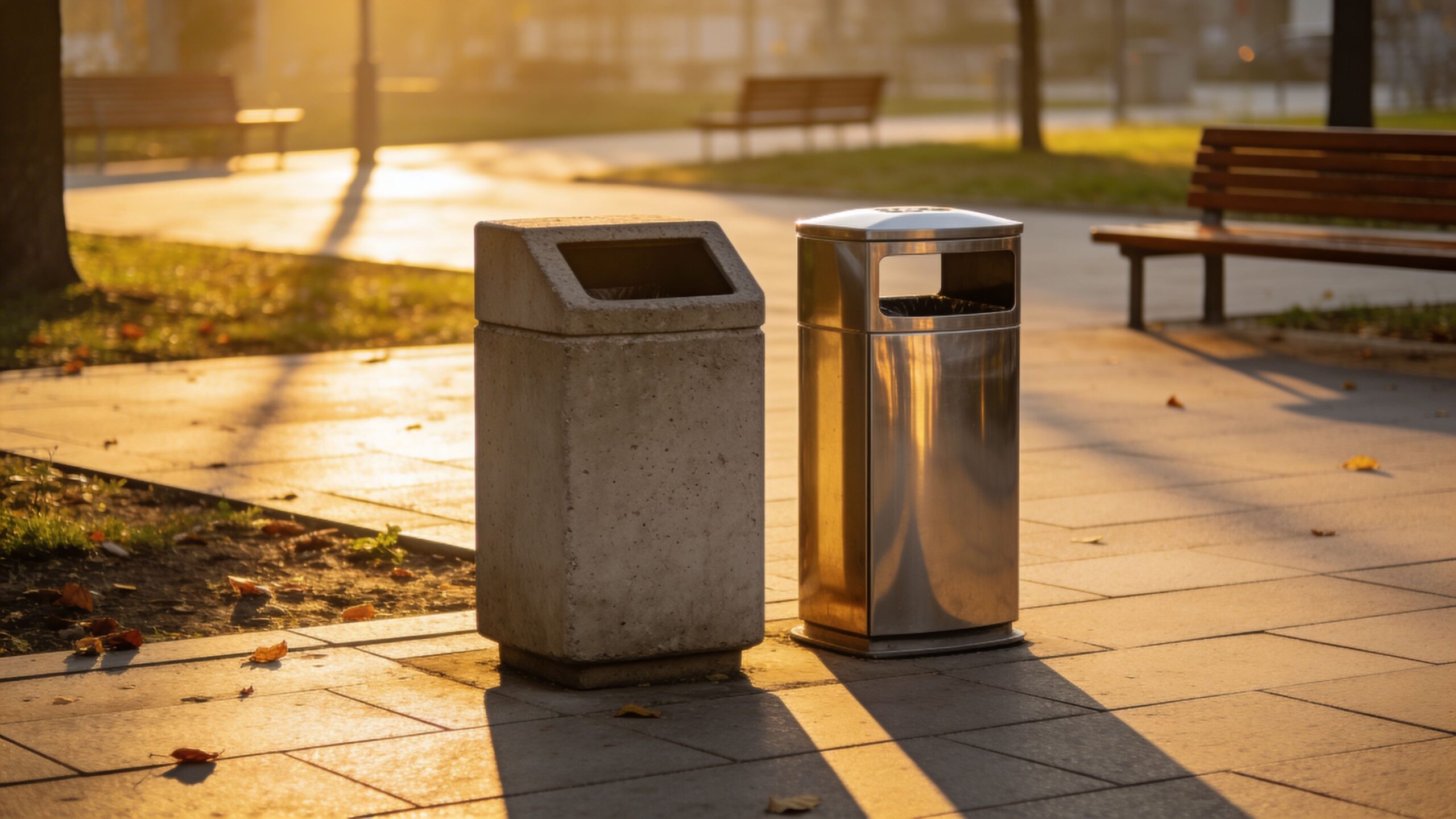
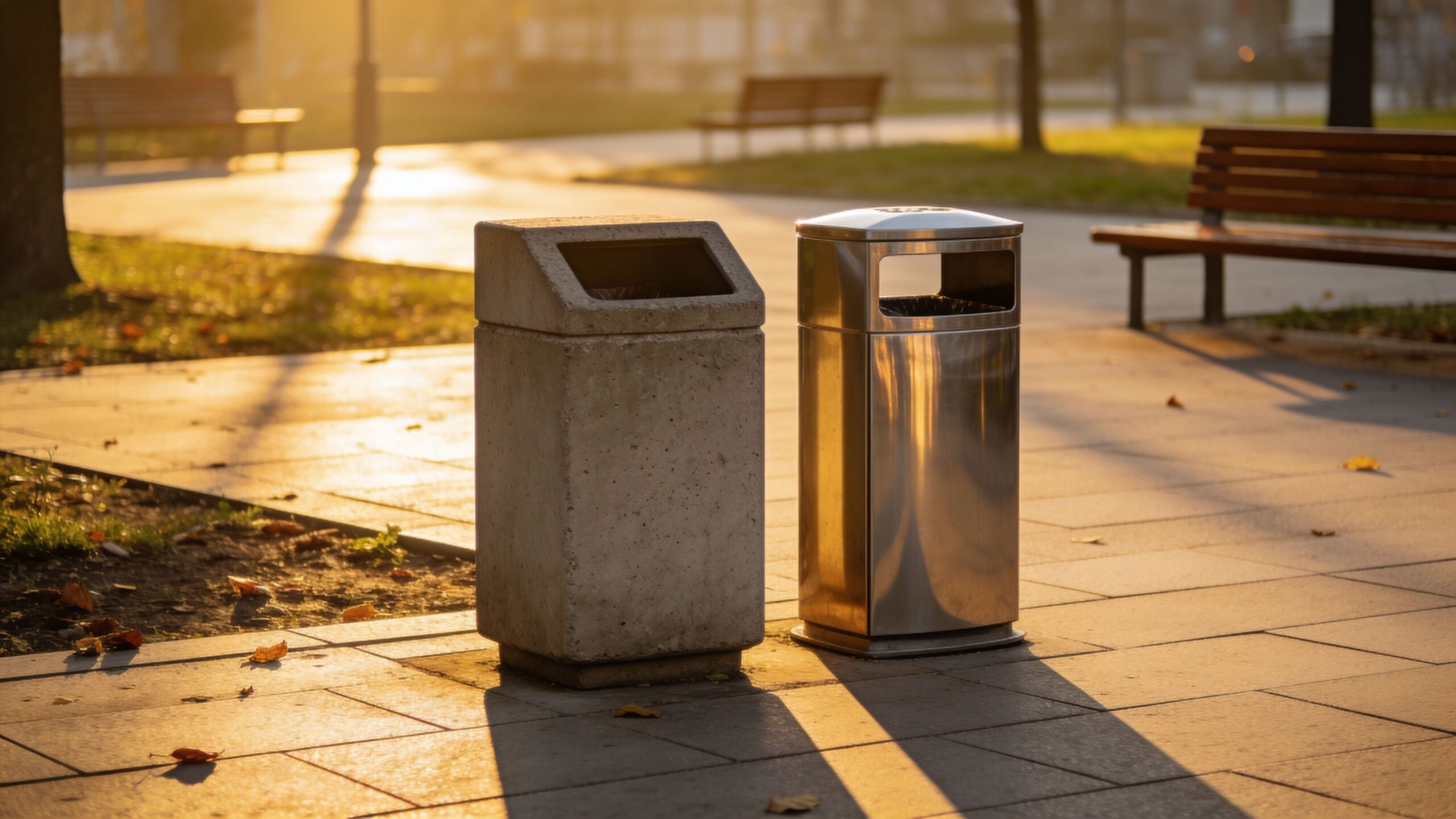
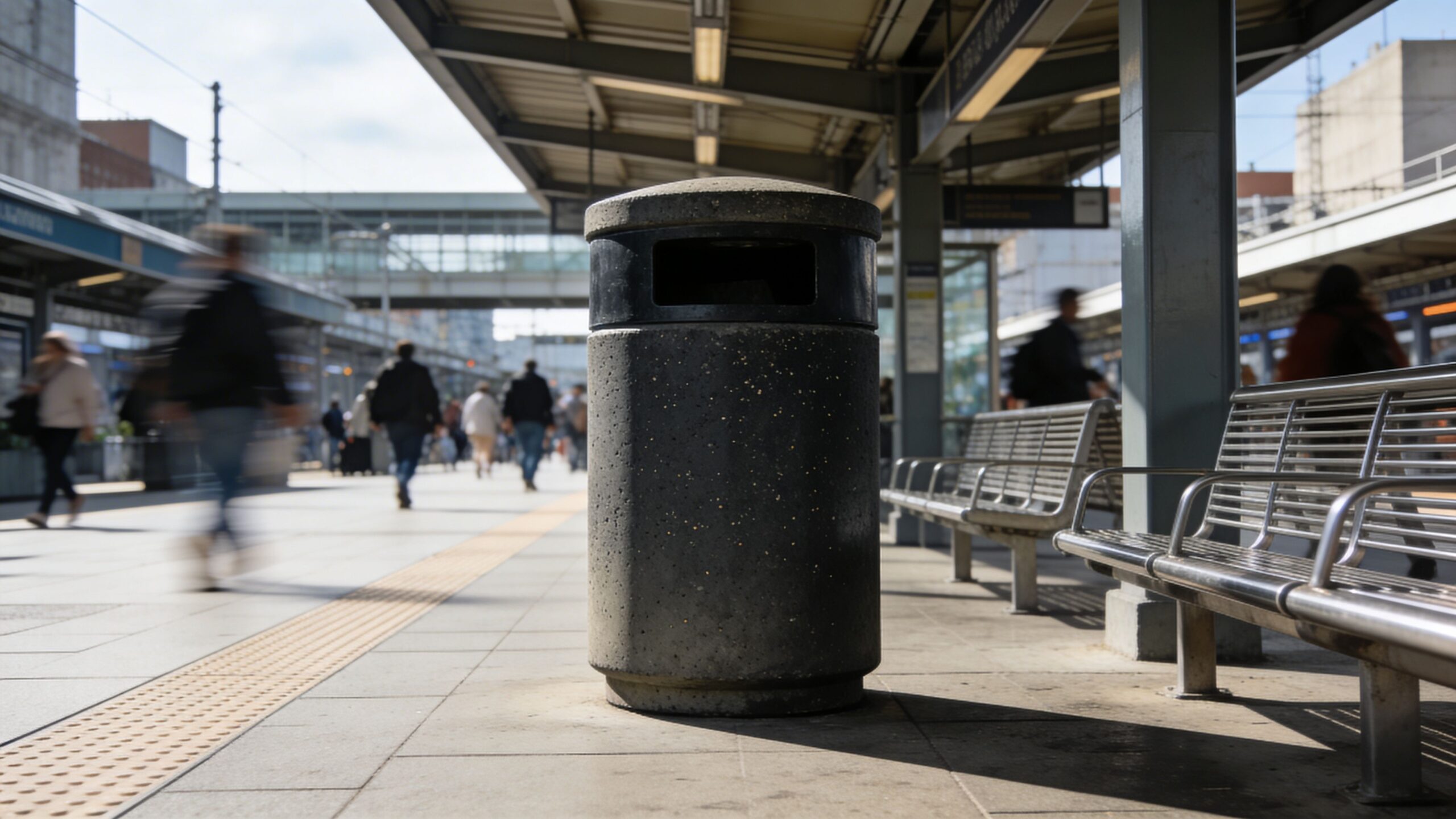
The classic round concrete receptacle is a favorite for good reason. It is stable, compact, and easy to place near benches, picnic areas, playgrounds, and entrances. Round designs often pair well with domed lids or rain hoods, helping reduce water entry and improve overall cleanliness. Many municipalities use this style because it balances capacity and footprint without looking overly industrial.
Square or rectangular concrete receptacles are popular in modern plazas, civic centers, and commercial districts where clean lines match surrounding architecture. These bins can look especially sleek when paired with metal trim or a refined surface finish. They also offer strong branding potential for spaces that want consistency across a campus or downtown area, even without signage. Their flat sides make them visually tidy when aligned along walkways or positioned beside benches and planters.
Concrete receptacles with decorative aggregate finishes work beautifully in parks with natural landscaping. Textured surfaces that resemble stone or include subtle color variations help the bin blend into trails, garden paths, and outdoor recreation areas. This is especially valuable in scenic parks where visitors want nature to be the focus, not infrastructure. The receptacle becomes part of the environment instead of a distraction.
Dual-stream concrete stations are increasingly common where recycling programs are in place. In these setups, concrete provides a stable, durable outer shell while interior compartments separate landfill waste and recyclables. In high-traffic public areas, dual-stream options can reduce contamination when openings are clearly differentiated. Even without text, shape and opening style can guide behavior, such as circular openings for bottles and a wider slot for general waste.
Some spaces benefit from concrete receptacles with restricted openings. In areas with wildlife pressure, such as mountain parks or coastal boardwalks, controlling access can reduce scavenging. In urban settings, restricted openings can discourage bulky dumping. These designs are especially useful near trailheads, restrooms, and parking lots, where people may be tempted to dispose of larger items.
Matching Receptacles to Location: Parks, Trails, Playgrounds, and Plazas
Public areas are not one-size-fits-all, and the best concrete trash receptacle for one area may be wrong for another. Matching receptacle style to location is one of the fastest ways to improve cleanliness while reducing maintenance workload.
In playgrounds, convenience matters. Families need an easy place to toss snack wrappers, wipes, and drink containers without searching. Receptacles should be visible, accessible, and placed near entrances and seating zones. Hooded lids can help keep rain out, but openings should remain easy to use for people juggling strollers and kids.
In picnic areas, capacity often needs to be higher. Picnics generate bulky waste—paper plates, food packaging, and bags. A slightly larger receptacle with a wide opening can reduce overflow and reduce the temptation for visitors to leave trash behind. Placing bins near grills, tables, and parking access points helps catch waste at the natural decision moments.
On trails, durability and wildlife considerations become more important. Trailhead bins face high-volume dumping from people cleaning out cars or disposing of post-hike trash. A sturdy concrete receptacle with a secure lid or restricted opening can help prevent scavenging and keep the area tidy. Further down trails, fewer bins may be preferable depending on park policy, but where bins exist, they should be highly durable and positioned where maintenance crews can access them.
In downtown plazas and civic corridors, aesthetics often lead. The receptacle needs to match the architecture and maintain a polished appearance. Rectangular concrete bins with refined finishes can reinforce an intentional streetscape design. They should also be positioned to support foot traffic flow, typically near seating clusters, transit stops, crosswalk corners, and building entrances.
In event-heavy parks and public gathering areas, consider how the space behaves during peak moments. Festivals, sports events, and concerts can overwhelm standard capacity. In these cases, using larger bins or adding temporary supplemental receptacles during events helps maintain cleanliness. Concrete bins can act as the permanent backbone of the system, with temporary units brought in as needed.
Maintenance and Servicing: Making Cleanup Faster and Smarter
The best concrete trash receptacles are designed not only for visitors, but also for the crews who maintain them. Serviceability influences labor time, cleanliness outcomes, and long-term satisfaction with the purchase.
A removable liner is one of the most important servicing features. Liners simplify bag changes and reduce mess. A well-designed liner fits snugly, lifts easily, and supports the weight of full bags without flexing. For maintenance teams, a liner that’s too flimsy or too deep can slow work and increase strain. The best solutions balance capacity with practical lifting limits.
Placement also affects servicing. Receptacles should be positioned where crews can access them efficiently, ideally along routes that can be reached by maintenance carts or vehicles without damaging landscaping. Placing bins in difficult-to-access corners may look tidy, but it can increase labor time and lead to less frequent servicing, which increases overflow risk.
Concrete surfaces benefit from sealing. A quality sealant helps resist stains from spilled beverages, food waste, and environmental grime. It also reduces moisture absorption and supports long-term durability. While concrete is strong, it can still discolor if left unsealed in harsh conditions. A simple maintenance plan that includes periodic cleaning and resealing can keep receptacles looking newer for longer.
Cleaning is typically straightforward. Mild soap and water are often enough for routine care, while occasional power washing can refresh heavily used bins. Hardware components, if present, should be corrosion-resistant, particularly in coastal or winter-salt environments. Choosing stainless steel or powder-coated elements can reduce replacement needs.
The best receptacles help prevent odor problems through smart design. Hooded lids reduce exposure of contents to sun and air currents, while liners prevent liquids from seeping into the shell. If odor control is a priority, choosing designs that limit rain entry and reduce liquid accumulation can make a noticeable difference.
A Smart Buying Framework: How to Choose the Right Receptacle Set
Buying concrete trash receptacles for public spaces is rarely about purchasing a single unit. Most properties need a coordinated system that supports behavior, maintenance routines, and visual consistency. The best approach is to treat receptacles as part of a site-wide strategy.
Start with your environment. Consider climate, foot traffic, and the types of waste likely to be generated. A lakeside park with wind and wildlife needs different features than an urban plaza with lunchtime crowds. Next, define servicing expectations. How often will bins be emptied, and who will do it? If servicing is infrequent, prioritize larger capacity and lids that protect contents from weather. If servicing is daily, you may prioritize streamlined placement and ease of liner access.
Then think about cohesion. Concrete receptacles often look best when matched with other site elements such as benches, planters, bollards, and lighting. Even subtle consistency in shape, finish, and color can elevate the entire space. In parks with multiple zones, you may choose one unified style or a coordinated family of styles that fits each area’s character while still feeling part of the same system.
Also consider whether you want single-stream or dual-stream waste options. Recycling programs can be effective in public spaces when containers are easy to understand and conveniently placed. If recycling is part of your plan, choose receptacles designed to reduce contamination through differentiated openings and internal compartment layouts.
Finally, consider long-term costs. Concrete bins often have a higher upfront cost than plastic or thin metal, but their lifespan and lower replacement needs can make them a better value over time. A receptacle that lasts decades while maintaining its appearance and function can reduce total cost of ownership significantly.
Cleaner Parks, Better Experiences, Stronger Communities
The best concrete trash receptacles for parks and public areas do something remarkable: they create order without demanding attention. They help people do the right thing quickly and naturally. They reduce litter, support maintenance teams, and protect the visual integrity of public spaces that communities care about. Concrete excels because it is stable, durable, and adaptable. It resists weather, discourages vandalism, and maintains a consistent, intentional look across high-traffic areas. With the right lids, liners, and placement strategy, concrete receptacles become the backbone of a clean, welcoming environment—one that visitors enjoy and communities are proud to maintain. Choosing the right receptacles is ultimately about protecting the experience of the space. When parks and public areas feel cared for, people treat them with more respect. A well-designed waste system supports that cycle. It keeps paths clear, gathering areas inviting, and landscapes free from litter. In that way, a concrete trash receptacle is not just a container. It’s a quiet investment in the pride, comfort, and beauty of public life.