Bike parking has transformed from a simple necessity into a critical element of urban and commercial design. As cycling continues to grow in popularity, property owners, city planners, and businesses are faced with a key decision: choosing between wave bike racks and traditional racks. While both serve the same fundamental purpose, the differences in design, usability, and long-term performance can significantly impact how a space functions and feels. The debate between wave bike racks and traditional racks is not just about appearance. It is about efficiency, user experience, durability, and how well each option supports real-world cycling behavior. Understanding these differences is essential for making an informed decision that enhances both practicality and visual appeal.
A: Not always—wave racks can look better and feel more design-friendly, but some traditional rack styles may offer simpler and more consistent everyday bike support.
A: They offer a recognizable, attractive form that can blend well into many properties while still supporting multiple bikes.
A: Many traditional designs, especially simple upright forms, make frame support and bike spacing more straightforward and predictable.
A: The better option is the one that supports the bike frame securely and is installed in a visible, well-anchored, easy-to-use location.
A: Sometimes on paper, but real-world capacity depends on bike size, lock style, spacing, and how easily riders can park without overlap.
A: It depends on the layout—traditional racks may be easier to plan tightly, while wave racks can work well if there is enough maneuvering room.
A: Many designers and property owners think so because the curved form feels more integrated and less purely utilitarian.
A: Simpler layouts with strong frame support and good spacing often perform best, regardless of whether the rack is wave-style or traditional.
A: No—installation quality, usability, maintenance, and long-term satisfaction matter more than the cheapest upfront option.
A: Focusing too much on appearance or catalog capacity and not enough on real frame support, rider convenience, and site-specific layout.
Breaking Down the Designs: Curves vs Conventional Structures
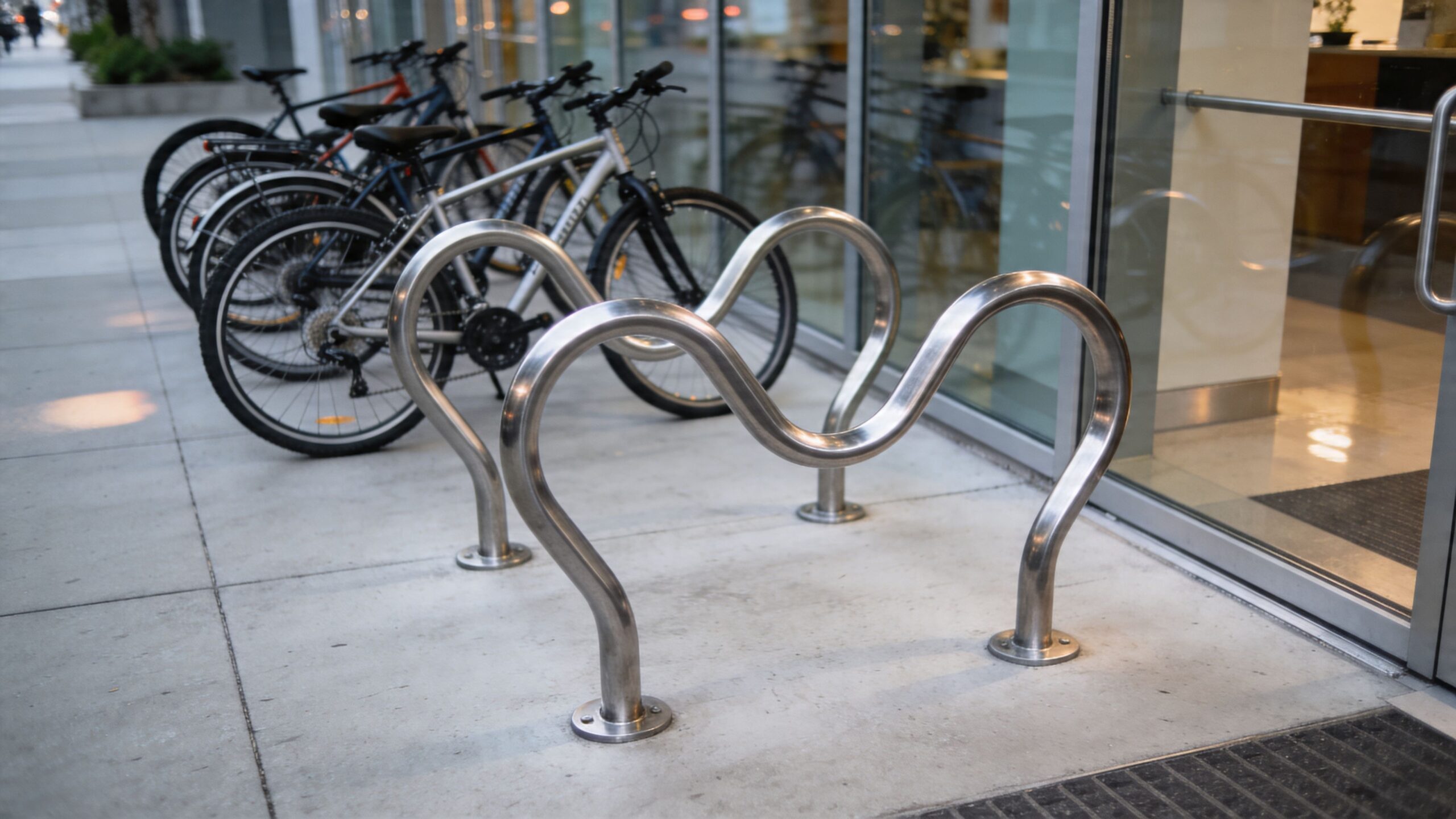
Wave bike racks are defined by their continuous, flowing curves. This design allows multiple bikes to be secured along a single structure, with each curve acting as an individual locking point. The result is a flexible and adaptable system that accommodates a wide range of bike styles and user preferences.
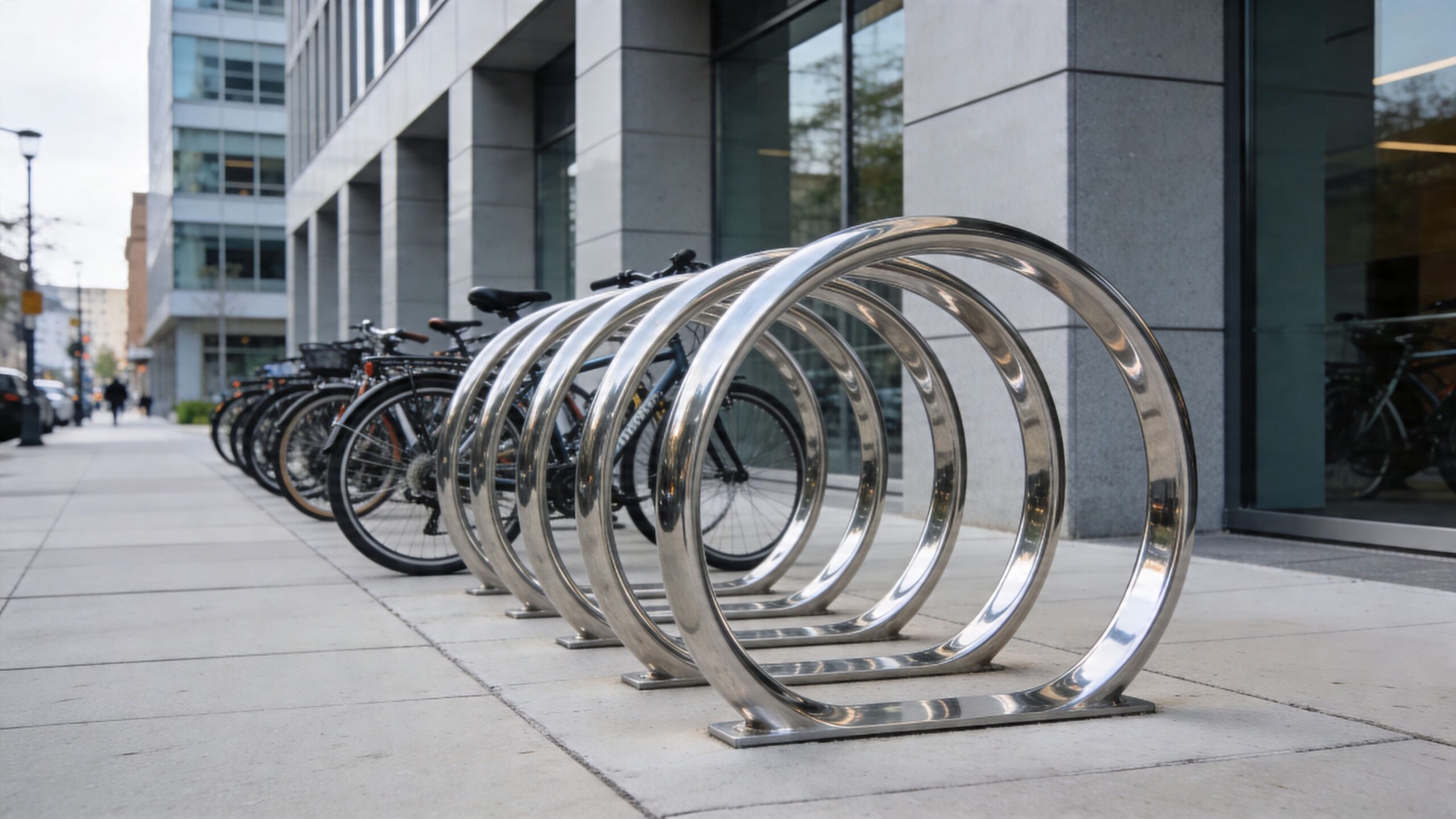
Traditional racks, on the other hand, come in a variety of forms, including inverted U racks, grid-style racks, and vertical racks. Each type has its own strengths and limitations. Inverted U racks are known for their simplicity and security, while grid racks can maximize capacity in tight spaces. Vertical racks are often used indoors to save floor space but may not be as convenient for all users.
The key difference lies in how these designs interact with users. Wave racks offer a more fluid experience, while traditional racks often require more precise positioning. This distinction plays a major role in determining which option is better suited for a particular environment.
Real-World Usability: Which Option Works Best for Cyclists
When it comes to usability, the experience of the cyclist is paramount. Wave bike racks excel in this area due to their intuitive design. Riders can approach from either side, choose an available curve, and secure their bike without needing to align it perfectly. This flexibility makes wave racks particularly appealing in busy or unpredictable environments.
Traditional racks can be equally effective, but their usability often depends on the specific type. Inverted U racks provide straightforward locking points and are widely regarded as one of the most secure options. However, grid-style racks can sometimes create confusion or limit how bikes can be positioned, especially when space is tight.
In high-traffic areas, ease of use becomes even more important. A rack that allows quick and effortless parking encourages consistent use and reduces congestion. In this context, wave racks often have an advantage due to their adaptability and user-friendly design.
Capacity and Space Efficiency: Maximizing Every Inch
Capacity is a crucial factor when choosing between wave and traditional racks. At first glance, wave racks appear to offer high capacity due to their multiple curves. However, real-world usage often reveals that actual capacity may be slightly lower than theoretical estimates, as cyclists need space to maneuver and avoid overlapping bikes.
Traditional racks, particularly grid and vertical designs, can sometimes achieve higher density in confined spaces. This makes them a practical choice for areas where maximizing capacity is the primary goal. However, this efficiency can come at the cost of convenience, as tightly packed bikes may be harder to access.
Wave racks strike a balance between capacity and usability. They may not always provide the highest number of parking spots per square foot, but they offer a more comfortable and accessible experience. For many properties, this balance is more valuable than maximizing capacity alone.
Durability and Maintenance: Built for the Long Haul
Both wave and traditional racks can be highly durable, but their longevity depends on materials, construction quality, and environmental conditions. Steel is the most common material for both types, often treated with galvanization or powder coating to resist corrosion.
Wave racks benefit from their continuous design, which can reduce stress points and improve structural integrity. Traditional racks, especially those with multiple joints or moving parts, may require more maintenance over time. However, well-constructed inverted U racks are known for their simplicity and durability, often matching or exceeding the lifespan of wave racks.
Maintenance considerations also play a role. A rack that is easy to clean and resistant to wear will maintain its appearance and functionality longer. In this regard, both options can perform well when made from high-quality materials, but simpler designs generally require less upkeep.
Aesthetic Impact: Shaping the Look of a Space
Aesthetics are often overlooked in discussions about bike racks, but they play a significant role in how a space is perceived. Wave bike racks are frequently chosen for their modern, sculptural appearance. Their flowing lines can complement contemporary architecture and create a sense of movement within a space.
Traditional racks tend to have a more utilitarian look. While this can be appropriate for certain environments, it may not contribute as much to the overall design aesthetic. That said, inverted U racks can still offer a clean and minimal appearance, especially when finished in neutral colors.
The choice between wave and traditional racks often comes down to the desired visual impact. For properties that prioritize design and branding, wave racks can serve as both a functional element and a subtle design feature.
Installation and Flexibility: Adapting to Different Needs
Installation methods for wave and traditional racks are similar, typically involving surface mounting or in-ground installation. However, the design of the rack can influence how easily it can be integrated into a space.
Wave racks, being longer and more continuous, may require more planning to ensure proper placement and spacing. Traditional racks, especially smaller units like inverted U racks, can be more modular and easier to arrange in different configurations. This flexibility can be advantageous for properties that may need to adjust their layout over time.
In terms of security, both types can be highly effective when properly installed. In-ground installation provides maximum stability, while surface mounting offers greater flexibility. The choice depends on the specific needs of the property and the level of permanence required.
Making the Right Choice: Matching the Rack to the Mission
Deciding between wave bike racks and traditional racks ultimately comes down to understanding the priorities of your space. If the goal is to create a user-friendly, visually appealing environment that encourages cycling, wave racks are often the better choice. Their intuitive design and modern aesthetic make them a popular option for a wide range of applications. On the other hand, if maximizing capacity or achieving a specific functional requirement is the primary concern, traditional racks may be more suitable. Inverted U racks, in particular, offer a proven balance of security and simplicity, making them a reliable choice for many settings. There is no one-size-fits-all answer. The best solution is one that aligns with the needs of the users, the characteristics of the environment, and the long-term goals of the property. By carefully considering these factors, you can choose a bike rack that not only meets practical requirements but also enhances the overall experience of the space.