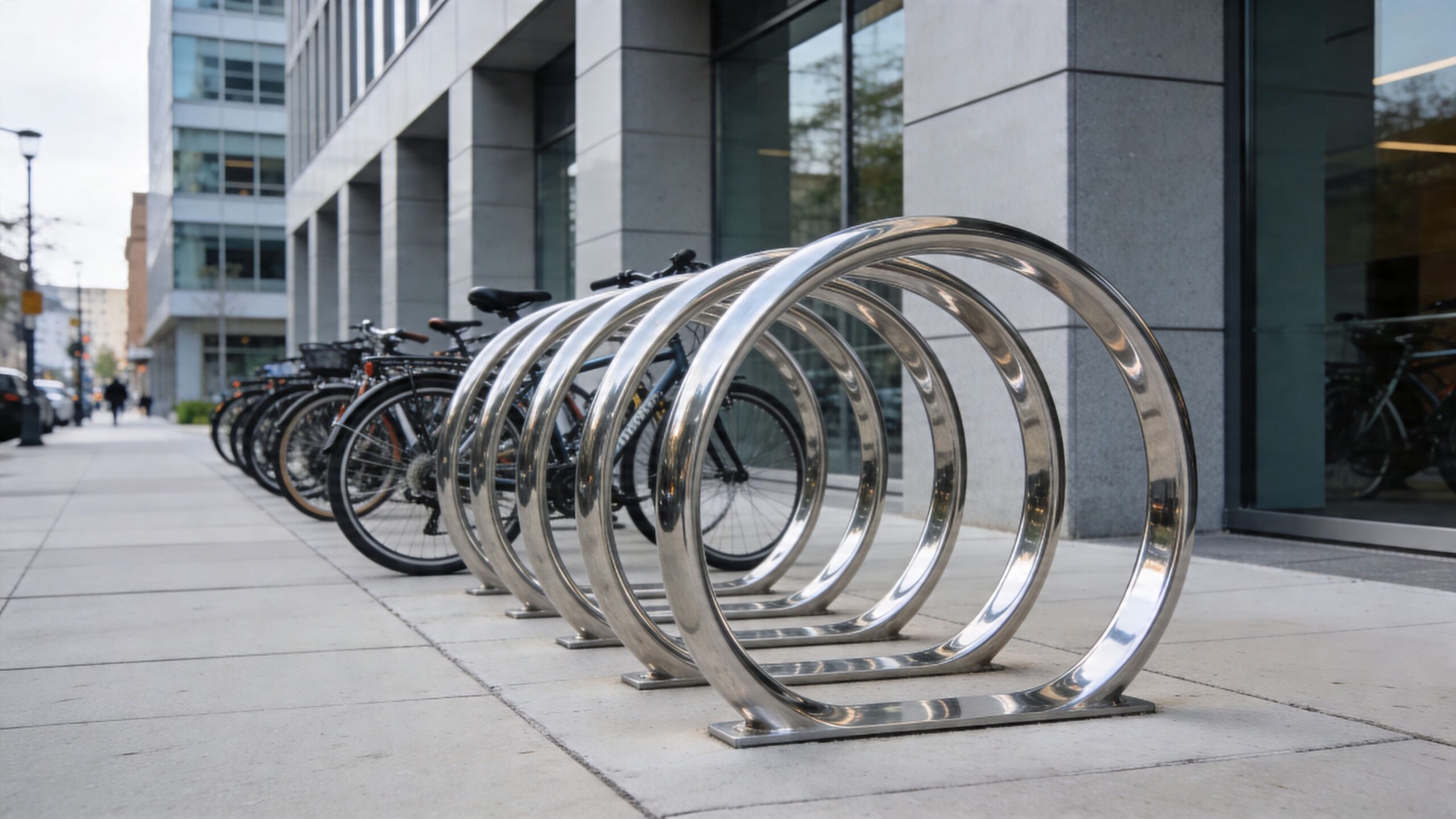
How many bikes fit on a wave bike rack? It seems like a straightforward question, yet the answer reveals far more about design, user behavior, and real-world functionality than most people expect. For property owners, city planners, and businesses, understanding capacity is not just about numbers—it is about creating a seamless experience for cyclists while maintaining an organized, visually appealing space. Wave bike racks are often chosen for their clean design and ability to accommodate multiple bicycles within a single structure. But capacity is not a fixed number carved in steel. It depends on spacing, usage patterns, and the type of environment in which the rack is installed. To truly understand how many bikes a wave rack can hold, it is necessary to look beyond manufacturer specifications and explore how these racks perform in real-world conditions.
A: It depends on the rack length and spacing, but many wave racks are practically used for about 2 to 5 bikes, with some larger models rated for more.
A: Because actual bike size, handlebar width, lock style, and surrounding clearance often reduce how many bikes can fit comfortably.
A: Often yes, but it depends on the rack layout and whether there is enough clearance on both sides for riders to park and lock bikes properly.
A: Yes, heavier and bulkier e-bikes can reduce overall capacity because they need more maneuvering room and often take up more space.
A: Tight site placement, wide handlebars, poor access angles, and racks installed too close to walls or other obstacles.
A: Not necessarily—longer racks create more potential lock points, but they still need proper spacing and layout to be fully useful.
A: Plan for comfortable average use so the rack works well every day instead of only looking good in a manufacturer diagram.
A: If riders struggle to turn, overlap handlebars, or avoid certain parking spots, the layout is likely reducing true capacity.
A: Sometimes yes, because occasional users may tolerate tighter spacing, but busy properties still benefit from more generous layouts.
A: Use the manufacturer rating as a starting point, then reduce that number based on bike mix, clearance, and how comfortably riders can actually park.
The Anatomy of a Wave Rack: Where Capacity Begins
At the heart of every wave bike rack is its signature design—a continuous series of curves that create multiple locking points along a single frame. Each curve is typically intended to support one bicycle, allowing the frame and wheel to be secured at the same time.
In theory, this means that a rack with five curves could hold five bikes. However, the reality is more nuanced. The spacing between curves, the height of the rack, and the width of the tubing all influence how easily bikes can be positioned. If curves are too close together, handlebars and pedals may overlap, reducing usable capacity. If they are spaced too far apart, the rack may occupy more space than necessary without increasing efficiency.
Understanding the anatomy of a wave rack is the first step in determining its true capacity. It highlights the importance of design details that may seem minor but have a significant impact on usability.
Manufacturer Capacity vs Real-World Usage
Manufacturers often provide a maximum capacity rating for wave bike racks, typically based on ideal conditions. These estimates assume that bikes are evenly spaced, properly aligned, and parked without interference. While this provides a useful baseline, real-world usage rarely matches these conditions.
Cyclists approach racks from different angles, use various locking methods, and park bikes of different sizes. These variables can reduce the number of bikes that comfortably fit on a rack. In practice, many installations find that actual capacity is closer to 70 to 80 percent of the stated maximum.
This discrepancy is not a flaw in the design but a reflection of how people interact with shared spaces. Planning for realistic capacity ensures that the rack remains functional and user-friendly, even during peak usage.
Spacing and Layout: The Hidden Factors That Matter Most
The number of bikes a wave rack can hold is influenced not only by the rack itself but also by how it is positioned within a space. Adequate clearance around the rack allows cyclists to maneuver their bikes without difficulty, which in turn affects how efficiently the rack is used.
If a rack is placed too close to a wall or another obstacle, access may be limited to one side, effectively reducing capacity. Similarly, installing multiple racks too close together can create congestion, making it harder for users to find available space.
Thoughtful layout planning can significantly improve capacity without changing the rack itself. Providing enough space between racks and ensuring clear access paths allows cyclists to use each curve as intended, maximizing the rack’s potential.
Bike Types and User Behavior: Why Not All Bikes Fit the Same
Not all bicycles are created equal, and this diversity plays a major role in determining how many bikes fit on a wave rack. Road bikes, mountain bikes, commuter bikes, and electric bikes all have different frame sizes, handlebar widths, and wheel dimensions.
Wider handlebars, for example, can extend into adjacent spaces, reducing the number of bikes that can be parked comfortably. Heavier bikes, such as electric models, may require more space for maneuvering and securing. Even the way a cyclist chooses to lock their bike can affect spacing, as some prefer to secure both wheels while others focus on the frame.
User behavior adds another layer of complexity. Some cyclists naturally leave extra space between bikes, while others park more tightly. These variations mean that capacity is not just a function of design but also of human interaction. Recognizing this variability helps create more accurate expectations and better planning decisions.
Length and Curve Count: Scaling Capacity with Design
Wave bike racks come in various lengths, each with a different number of curves. Longer racks can accommodate more bikes, but they also require more space and careful placement.
A common configuration might include four to six curves, translating to a theoretical capacity of four to six bikes. Larger installations may use extended racks with additional curves, increasing capacity while maintaining the same design principles.
However, simply increasing length does not guarantee better performance. Without proper spacing and layout, longer racks can become difficult to use, leading to underutilization. The key is to balance size with accessibility, ensuring that each additional curve contributes to usable capacity rather than just increasing theoretical numbers.
Designing for Comfort: Why Less Can Be More
One of the most important insights when evaluating wave bike rack capacity is that maximizing numbers does not always lead to the best outcome. A rack filled to its theoretical limit may appear efficient, but it can also create frustration for users.
Providing slightly more space than the minimum required allows cyclists to park and retrieve their bikes بسهولة, reducing congestion and improving the overall experience. This approach often results in higher long-term usage, as people are more likely to use a rack that is easy and convenient.
In many cases, designing for comfort rather than maximum density leads to better results. It creates a welcoming environment that encourages cycling and supports consistent use, which is ultimately more valuable than achieving the highest possible capacity on paper.
Planning for the Future: Capacity That Grows with Demand
As cycling continues to gain popularity, the demand for bike parking is likely to increase. Planning for this growth is an essential part of choosing and installing wave bike racks.
Rather than focusing solely on current needs, it is important to consider how usage may evolve over time. This might involve installing additional racks, leaving space for future expansion, or choosing designs that can be easily integrated into a larger system.
Future-proofing capacity also means considering changes in bike design and user behavior. As electric bikes and other new models become more common, racks must be able to accommodate their unique requirements. By thinking ahead, property owners can create a solution that remains effective and relevant for years to come.
The Real Answer: Capacity as a Dynamic Equation
So, how many bikes fit on a wave bike rack? The answer is not a single number but a range influenced by design, environment, and human behavior. While manufacturer specifications provide a starting point, real-world usage often tells a different story. A typical wave rack may comfortably hold slightly fewer bikes than its maximum rating, but this reduction often leads to a better user experience. By understanding the factors that affect capacity—such as spacing, layout, and bike diversity—it becomes possible to make more informed decisions. In the end, the goal is not just to fit as many bikes as possible but to create a system that works smoothly and efficiently. When capacity is viewed as a dynamic equation rather than a fixed number, wave bike racks become a powerful tool for enhancing both functionality and design in any space.