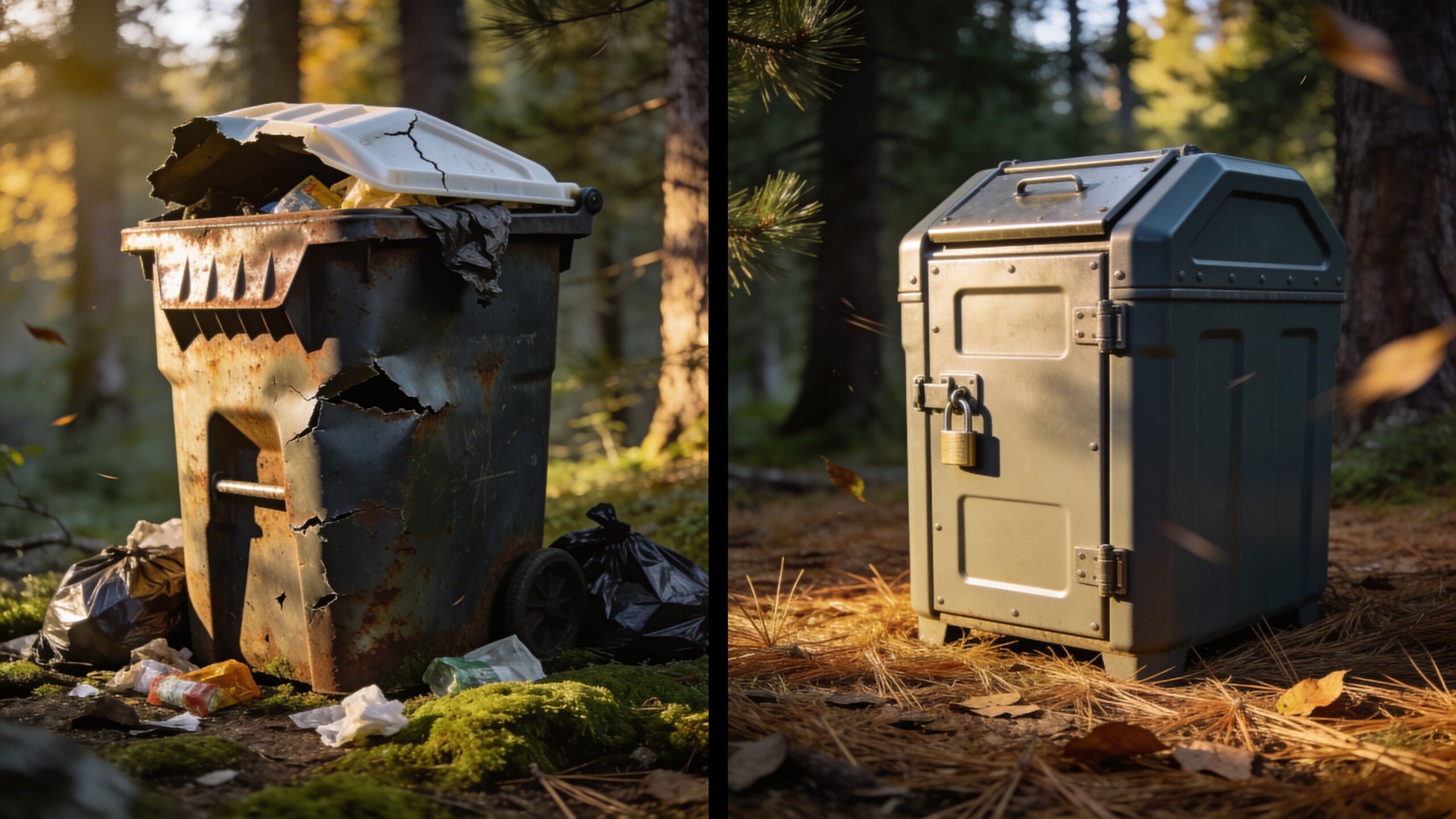
Across forests, foothills, and even suburban neighborhoods, the line between human living spaces and wildlife habitats continues to blur. As development expands into previously undisturbed areas, encounters with bears have become more frequent—and in many cases, preventable. One of the biggest attractants drawing bears closer to homes is something deceptively simple: trash. The smell of discarded food can travel long distances, turning an unsecured garbage can into an irresistible invitation. Bear-proofing your trash is not just about protecting your property; it plays a vital role in preserving the natural behavior of wildlife and preventing dangerous human-animal conflicts.
A: You can improve it with locks, straps, and better placement, but a true bear-resistant can is usually much more effective.
A: It helps a lot, especially if the garage is closed and the trash is sealed, but odor control still matters.
A: Meat scraps, seafood, dairy, grease, pet food, and sugary leftovers are some of the biggest triggers.
A: Not reliably. They may slow smaller animals, but bears can often defeat them quickly.
A: Yes. Regular cleaning helps remove food residue and cuts down on the odors that attract wildlife.
A: The safest approach is usually the morning of pickup rather than the night before.
A: Yes, especially in high-activity areas where a single can may not provide enough protection on its own.
A: Rinse them before disposal because leftover food and drink residue can still attract bears.
A: Smell-based deterrents are inconsistent and should not replace a secure trash system.
A: Clean the area thoroughly, remove all attractants, upgrade security immediately, and report repeated visits if needed.
Understanding the Bear Mindset: What Attracts Them
To effectively bear-proof your trash, it helps to understand what drives a bear’s behavior. Bears are highly intelligent, opportunistic feeders with an extraordinary sense of smell. They are capable of detecting food odors from miles away, and once they identify a reliable source, they will return repeatedly. Garbage bins, compost piles, and even recycling containers can all emit scents that attract bears, especially if they contain food residue.
What makes bears particularly challenging is their persistence and problem-solving ability. A standard trash can lid that might deter smaller animals is rarely enough to stop a determined bear. They can tip over containers, pry open lids, and even manipulate simple locking mechanisms. This means that effective bear-proofing must go beyond basic containment and focus on eliminating both access and attraction. Reducing odor, securing containers, and managing waste timing are all essential components of a successful strategy.
Step One: Choose the Right Bear-Resistant Container
The foundation of any bear-proofing effort begins with selecting the proper trash container. Not all bins are created equal, and investing in a bear-resistant model can make a significant difference. These containers are specifically designed to withstand the strength and dexterity of a bear, often featuring reinforced materials, locking lids, and weight distribution that prevents tipping.
When choosing a container, durability should be a top priority. Thick, high-density materials such as reinforced plastic or metal are far more effective than standard residential bins. The lid should lock securely and require a level of manipulation that a bear cannot easily replicate. Many certified bear-resistant containers are tested against real-world scenarios, ensuring they meet strict performance standards. While these options may come at a higher upfront cost, they provide long-term value by reducing damage, preventing messes, and minimizing the risk of repeated wildlife visits.
Equally important is the size and fit of the container. A bin that is too small may overflow, increasing odor and exposure, while one that is too large may be difficult to secure properly. Finding a balance that aligns with your household’s waste output is key to maintaining consistency in your bear-proofing efforts.
Step Two: Control Odors Before They Escape
Even the most secure container can become a magnet for bears if it emits strong food odors. Managing scent is one of the most critical—and often overlooked—steps in bear-proofing your trash. Bears rely heavily on their sense of smell, and reducing odor can significantly decrease the likelihood of attracting them in the first place.
Start by thoroughly rinsing food containers before placing them in the trash or recycling bin. Items such as cans, jars, and packaging can retain strong scents if not properly cleaned. Double-bagging waste, especially food scraps, can also help contain odors. Using heavy-duty trash bags with tight seals adds an extra layer of protection against scent leakage.
Another effective approach is to store particularly odorous waste, such as meat scraps or fish remains, in a freezer until trash collection day. This prevents decomposition and minimizes the release of strong smells that could attract wildlife. Additionally, periodically cleaning your trash bin with a mild bleach solution or specialized odor-neutralizing products can help maintain a less appealing scent profile. Consistency in these practices is essential, as even occasional lapses can create opportunities for bears to investigate.
Step Three: Secure the Container in a Fixed Location
Placement plays a crucial role in how effective your bear-proofing efforts will be. A bear-resistant container is only as strong as its environment, and positioning it in a strategic location can add another layer of defense. Ideally, trash bins should be stored in a secure, enclosed space such as a garage or shed until the morning of collection. Keeping them indoors limits both visibility and scent exposure.
If indoor storage is not an option, securing the container to a fixed object can help prevent tipping and tampering. This can be achieved using straps, chains, or specially designed anchoring systems that attach the bin to a post or structure. The goal is to make it difficult for a bear to knock over or carry away the container, reducing the likelihood of access.
Avoid placing trash bins near doors, windows, or areas where bears could cause damage while investigating. Keeping containers at a distance from living spaces not only protects your home but also discourages bears from associating your property with food. A well-chosen location, combined with proper anchoring, can significantly enhance the overall effectiveness of your bear-proofing setup.
Step Four: Time Your Trash Placement Strategically
One of the simplest yet most impactful strategies in bear-proofing is controlling when your trash is accessible. Leaving bins out overnight provides ample opportunity for bears to explore and feed under the cover of darkness. Adjusting your routine to minimize this window of exposure can make a noticeable difference.
The best practice is to place your trash outside on the morning of collection rather than the night before. This reduces the amount of time your waste is exposed and limits the chances of attracting wildlife. If your schedule requires early placement, consider coordinating with neighbors to ensure consistency across the area. A single unsecured bin can draw bears into a neighborhood, increasing the risk for everyone.
Seasonal awareness is also important. During certain times of the year, such as late summer and fall, bears enter a phase known as hyperphagia, where they actively seek out high-calorie food sources to prepare for winter. During these periods, extra vigilance is necessary, as bears are more motivated and persistent in their search for food.
Step Five: Reinforce with Additional Deterrents
While secure containers and proper timing form the core of bear-proofing, additional deterrents can provide extra protection. These measures are not meant to replace primary strategies but rather to complement them by creating an environment that is less inviting to wildlife.
Electric fencing is one of the most effective deterrents for areas with frequent bear activity. A properly installed low-voltage electric fence can create a strong psychological barrier, teaching bears to avoid the area altogether. Motion-activated lights or alarms can also startle and discourage bears from approaching, although their effectiveness may diminish over time as animals become accustomed to them.
Natural deterrents, such as ammonia-based cleaners or scent-repelling substances, can be used around trash storage areas to reduce attractiveness. However, these should be applied carefully and consistently to maintain their effectiveness. Combining multiple deterrents creates a layered defense system, increasing the likelihood that bears will move on in search of easier food sources.
Step Six: Maintain Consistency and Community Awareness
Bear-proofing is not a one-time effort but an ongoing commitment. Consistency in your practices ensures that bears do not develop habits associated with your property. Even a single instance of accessible trash can reinforce behavior and lead to repeated visits.
Equally important is the role of community awareness. Bears do not recognize property boundaries, and their behavior is influenced by the availability of food across an entire neighborhood. Encouraging neighbors to adopt similar bear-proofing measures can significantly enhance the effectiveness of your efforts. Community-wide initiatives, such as shared guidelines or local ordinances, can help create a unified approach to wildlife management.
Education plays a key role in maintaining long-term success. Understanding how and why bears are attracted to human environments empowers individuals to make informed decisions about waste management. By fostering a culture of responsibility and awareness, communities can reduce conflicts and promote coexistence with wildlife.
Step Seven: Adapting Your Strategy Over Time
As conditions change, so too should your approach to bear-proofing. Seasonal variations, changes in local wildlife activity, and shifts in household routines can all impact the effectiveness of your current setup. Regularly evaluating and adjusting your strategy ensures that it remains effective over the long term.
If you notice signs of bear activity, such as tracks, overturned bins, or repeated disturbances, it may be necessary to upgrade your containment system or add additional deterrents. Staying informed about local wildlife patterns and recommendations from authorities can provide valuable insights into how to adapt your approach.
Innovation in bear-resistant technology continues to evolve, offering new solutions for homeowners in bear-prone areas. From advanced locking mechanisms to improved materials, these developments make it easier than ever to secure trash effectively. Remaining open to new methods and continuously refining your strategy will help you stay ahead of potential challenges.
Creating a Safer Balance Between Homes and Wildlife
Bear-proofing your trash is a practical and impactful way to reduce human-wildlife conflict while protecting both your property and the natural environment. By understanding bear behavior, choosing the right equipment, managing odors, and maintaining consistent practices, you can create a system that effectively deters unwanted visitors. Each step builds upon the last, forming a comprehensive approach that addresses both attraction and access. Beyond individual efforts, the broader goal is to foster a balance where humans and wildlife can coexist without unnecessary conflict. Small actions, when taken collectively, can have a significant impact on preserving natural ecosystems and ensuring safety for all. In the end, bear-proofing is not just about securing a trash can—it is about embracing a mindset of responsibility, awareness, and respect for the world we share.