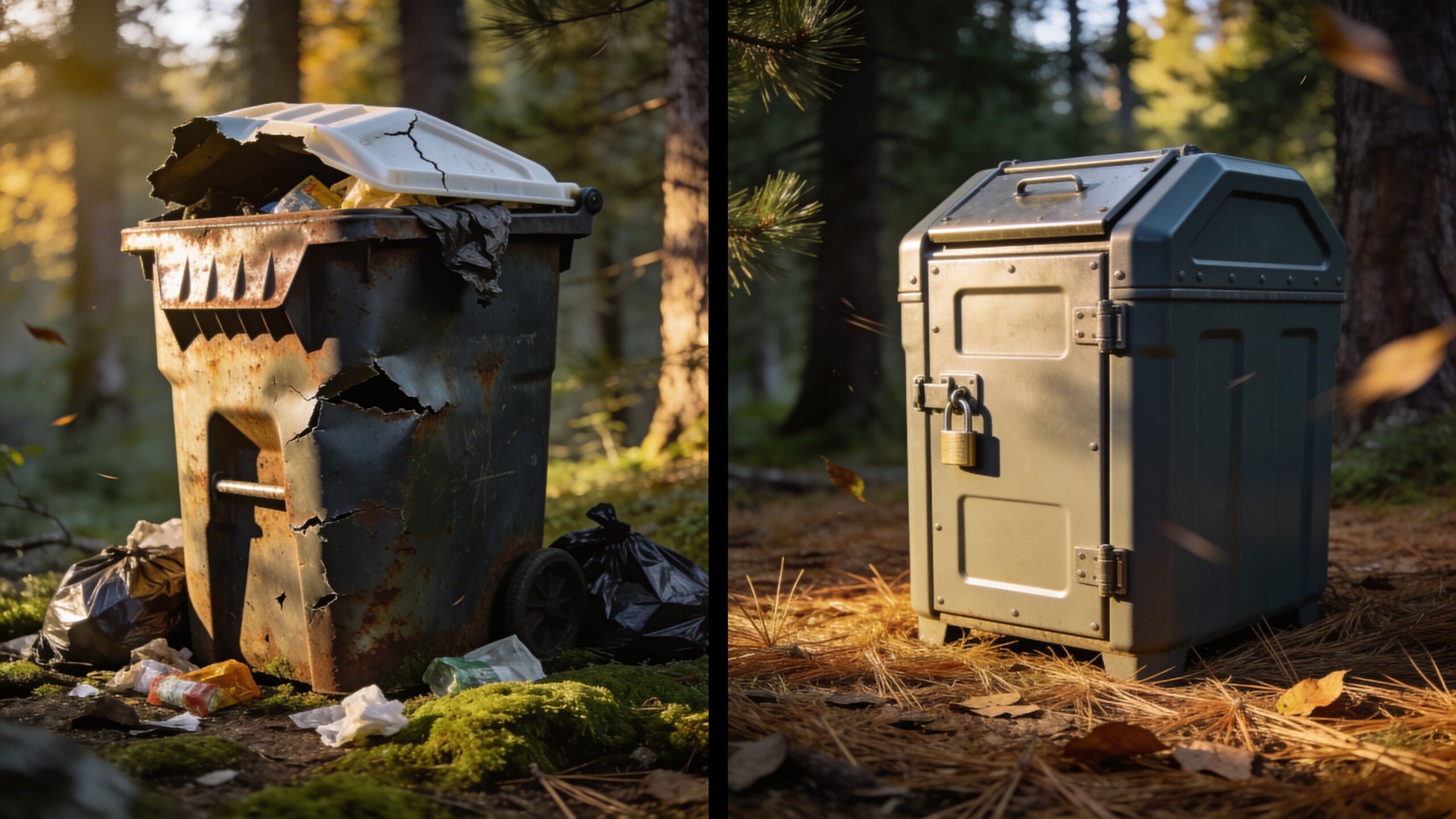
In regions where human development overlaps with natural bear habitats, something as ordinary as a trash can becomes a critical point of interaction. The difference between a secure container and an accessible one can determine whether a neighborhood remains peaceful or becomes a hotspot for repeated wildlife encounters. As more homeowners search for solutions, two terms often dominate the conversation: bear resistant and bear proof. At first glance, they seem interchangeable, but in practice, they represent very different levels of protection and reliability. Choosing the right option is not just about convenience or durability. It is about shaping the behavior of wildlife, protecting property, and contributing to long-term ecological balance. When trash is easily accessible, bears quickly learn to associate humans with food, leading to patterns that can escalate into dangerous situations. Understanding what actually works in preventing these outcomes requires a closer look at how these containers are designed, tested, and used in real-world environments.
A: In practical terms, not really. “Bear resistant” is the more accurate phrase because performance depends on the bear, the setup, and how the can is used.
A: A locking lid usually matters more because weight alone does not stop a determined bear from tipping or dragging a can.
A: Usually not. Most standard curbside carts are built for convenience, not for resisting large wildlife.
A: Yes. A closed lid helps, but strong food smells can still attract bears to investigate.
A: No. They may slow access a little, but they are not a dependable bear-resistant solution.
A: Inside a garage, shed, or another enclosed space is usually the most effective option.
A: Not always. A high-quality bear-resistant plastic can may outperform a thin or poorly latched metal one.
A: Yes. Odor control is part of what makes any trash system truly effective around bears.
A: Clean the area thoroughly, remove all attractants, improve the container setup immediately, and avoid putting trash out early.
A: Both matter, but even an excellent can can fail if it is overfilled, left open, or put out too soon.
The Language of Protection: Bear Resistant vs Bear Proof Defined
The distinction between bear resistant and bear proof lies at the heart of effective waste management in bear-prone areas. Bear resistant containers are designed to deter and delay access. They are built with reinforced materials, locking mechanisms, and structural features that make it difficult for bears to open them. However, the term resistant implies that, under certain conditions or with enough time and persistence, a bear may still find a way in.
Bear proof, on the other hand, suggests complete prevention. In theory, a bear proof container would be entirely impervious to tampering, regardless of the animal’s strength or ingenuity. In practice, however, truly bear proof products are rare, and the term is often used more as a marketing label than a technical standard. Wildlife experts and regulatory agencies tend to favor the term bear resistant because it reflects the reality that no system is entirely foolproof.
What matters most is not the label itself, but the level of performance behind it. Certified bear resistant containers undergo rigorous testing to ensure they can withstand real encounters. These tests often involve exposing the container to captive bears in controlled environments, measuring whether the animals can access the contents within a set time frame. Products that pass these tests are far more reliable than those that simply claim to be bear proof without verification.
Built to Withstand: How Bear Resistant Cans Are Engineered
The effectiveness of a bear resistant trash can comes down to thoughtful engineering. These containers are designed with the understanding that bears are not only strong but also highly intelligent problem solvers. Every element, from the thickness of the material to the design of the lid, plays a role in preventing access.
Most bear resistant cans are constructed from high-density polyethylene or reinforced metal, materials that can withstand heavy impact and repeated attempts to break in. The lids are typically equipped with locking mechanisms that require coordinated actions, such as pressing and turning simultaneously, which are difficult for bears to replicate. Some designs also incorporate weight distribution features that make the container harder to tip over, reducing the chances of a bear gaining leverage.
Another important aspect is the absence of weak points. Hinges, seams, and latches are often reinforced or concealed to prevent bears from exploiting them. Even the shape of the container can influence its effectiveness, with rounded edges and smooth surfaces making it more difficult for animals to grip or pry. These design choices reflect a deep understanding of bear behavior and are the result of years of testing and refinement.
The Myth of Absolute Security: Why “Bear Proof” Falls Short
The idea of a completely bear proof trash can is appealing, but it often oversimplifies the reality of wildlife interactions. Bears vary widely in size, strength, and persistence, and what works against one individual may not work against another. Environmental factors, such as terrain and access to leverage, can also influence the outcome of an encounter.
In many cases, products labeled as bear proof rely more on perception than performance. Without standardized testing or certification, these claims can be misleading. A container may appear secure under normal conditions but fail when faced with a determined bear that has learned to manipulate similar systems. This is why experts emphasize the importance of verified bear resistant designs rather than relying on absolute guarantees.
The key takeaway is that no container can provide total security on its own. Effectiveness depends on a combination of design, proper use, and environmental context. Even the best bear resistant can may fail if it is not used correctly, such as leaving the lid unlocked or placing it in an exposed location. Understanding these limitations helps set realistic expectations and encourages a more comprehensive approach to bear-proofing.
Real-World Performance: What Actually Works in Bear Country
When evaluating what actually works, real-world performance matters more than theoretical claims. Communities that have successfully reduced bear incidents often rely on certified bear resistant containers combined with consistent usage practices. These systems are not perfect, but they significantly reduce the likelihood of access and discourage bears from returning.
One of the most effective strategies is creating a consistent barrier to food access. When bears repeatedly encounter secured containers that they cannot open, they are more likely to move on in search of easier opportunities. Over time, this can lead to a noticeable decline in bear activity within a neighborhood. Conversely, even a single unsecured container can undermine these efforts by rewarding the animal and reinforcing its behavior.
Placement and timing also play critical roles. Storing trash indoors until collection day, securing containers to fixed objects, and minimizing exposure time all contribute to overall effectiveness. These practices work in tandem with the container itself, creating a layered defense that addresses both access and attraction. The result is a system that is far more reliable than any single solution on its own.
Cost, Convenience, and Commitment: Choosing the Right Option
Selecting between bear resistant and so-called bear proof containers often comes down to balancing cost, convenience, and long-term commitment. Certified bear resistant cans typically come at a higher price point, reflecting the materials and testing involved in their design. However, this investment can pay off by reducing property damage, cleanup efforts, and the risk of repeated wildlife encounters.
Convenience is another important factor. Some locking mechanisms, while effective, may require extra effort to operate, which can lead to inconsistent use. A container that is difficult for humans to open may also be left unsecured out of frustration, negating its benefits. Finding a design that offers both security and ease of use is essential for maintaining consistency.
Commitment extends beyond the initial purchase. Bear-proofing is an ongoing process that requires attention to detail and adherence to best practices. This includes managing odors, maintaining the container, and staying informed about local wildlife activity. Choosing the right container is just the first step in a broader strategy that must be sustained over time.
Beyond the Bin: Supporting Strategies That Make a Difference
While the container itself is a critical component, it is only part of the solution. Supporting strategies can significantly enhance the effectiveness of bear-resistant systems and create a more comprehensive approach to waste management. These measures focus on reducing attraction, limiting access, and reinforcing deterrence.
Odor control is one of the most impactful steps. Cleaning containers regularly, rinsing food waste, and using sealed bags can reduce the scent that draws bears in the first place. Strategic placement, such as storing bins in enclosed areas or away from entry points, adds another layer of protection. In areas with high bear activity, additional deterrents like electric fencing or motion-activated devices can further discourage exploration.
Community involvement is equally important. Bears do not operate within property lines, and their behavior is influenced by the availability of food across an entire area. Coordinated efforts among neighbors can create a consistent environment that discourages bears from entering in the first place. This collective approach amplifies the effectiveness of individual actions and contributes to long-term success.
Redefining Success: Coexisting with Wildlife Responsibly
The goal of bear-resistant waste management is not to eliminate wildlife presence but to create a balance where humans and bears can coexist without conflict. This requires a shift in perspective, viewing trash not as a simple byproduct of daily life but as a potential influence on animal behavior. By securing waste effectively, homeowners play an active role in shaping how wildlife interacts with their environment. Understanding the difference between bear resistant and bear proof is a crucial step in this process. It highlights the importance of realistic expectations, verified performance, and consistent practices. Rather than seeking absolute solutions, success lies in building systems that reduce risk and promote responsible coexistence. In the end, what actually works is a combination of well-designed containers, thoughtful habits, and community awareness. Together, these elements create a framework that protects property, preserves natural behavior, and supports a safer environment for both humans and wildlife.