City living has transformed the way people think about space. Apartments are becoming more compact, urban homes are prioritizing efficiency, and multifunctional interiors are replacing oversized storage rooms and garages. At the same time, cycling has exploded in popularity as commuters, fitness enthusiasts, and recreational riders embrace bikes for transportation, exercise, and adventure. These two trends have created a growing challenge for apartment dwellers: where do you store a bike when every square foot matters? Vertical bike racks have emerged as one of the smartest and most stylish solutions for modern small-space living. Instead of allowing bikes to dominate valuable floor space, vertical systems use unused wall height to create clean, organized, and visually appealing storage setups. For apartment residents, studio owners, and people living in compact urban environments, vertical bike racks can completely change the way a space feels and functions.
A: Yes, they are one of the best options for apartments because they use wall height instead of valuable floor space.
A: Yes, choose a freestanding rack, leaning rack, or tension-style storage system if you want a renter-friendly option.
A: Not if the rack is properly sized, padded, and installed. Rubber-coated hooks and wheel supports help protect rims and frames.
A: Some can, but many e-bikes are too heavy for standard racks. Always verify the weight capacity first.
A: Most adult bikes need roughly 7–8 feet of height, though exact clearance depends on bike size and rack design.
A: Wall hooks save more space, but freestanding racks are easier for renters and usually require no permanent installation.
A: Yes, but spacing matters. Staggering heights or using pivoting racks helps prevent handlebar and pedal interference.
A: Only some do. Look for oversized hooks or racks specifically rated for wider tires.
A: They can, especially after outdoor rides. Wheel trays, wall guards, or washable panels can prevent scuffs.
A: A pivoting wall rack or low-lift freestanding rack is usually easiest because it reduces lifting effort and keeps the bike accessible.
Why Vertical Bike Racks Are Perfect for Small Spaces
Traditional bike storage methods are rarely compatible with apartment life. Leaning a bike against a wall takes up significant floor space, blocks walkways, and often creates a messy appearance that makes a room feel cramped. Horizontal racks can help, but they still require a wide footprint that many apartments simply cannot spare.
Vertical bike racks solve this problem by using upward space instead of outward space. Most apartments have underutilized vertical wall areas that can safely support bike storage while keeping the floor open for furniture, movement, and daily activities. By positioning the bike upright, residents can often reduce the amount of floor space occupied by their bicycle by more than half.
This approach is especially useful in studio apartments, compact lofts, college housing, and small condos where every inch counts. A vertical rack can fit inside an entryway corner, beside a bookshelf, near a closet, or even behind a door without interrupting the overall layout of the room.
Beyond space efficiency, vertical bike racks also improve organization. Apartment living becomes far more comfortable when items have designated storage locations. Instead of moving the bike repeatedly throughout the day, riders can quickly secure it in a permanent place that keeps the home cleaner and more functional.
For people who own premium road bikes, mountain bikes, gravel bikes, or e-bikes, vertical racks also provide protection. Leaving bikes on the floor increases the risk of scratches, bent components, and accidental damage. Elevating the bike reduces these risks while helping maintain the bike’s long-term condition.
The Rise of Stylish Bike Storage in Interior Design
Bike storage is no longer treated as a purely functional necessity. In many modern apartments, bicycles have become part of the interior aesthetic. Designers and homeowners increasingly embrace bikes as visual centerpieces that reflect lifestyle, personality, and urban culture.
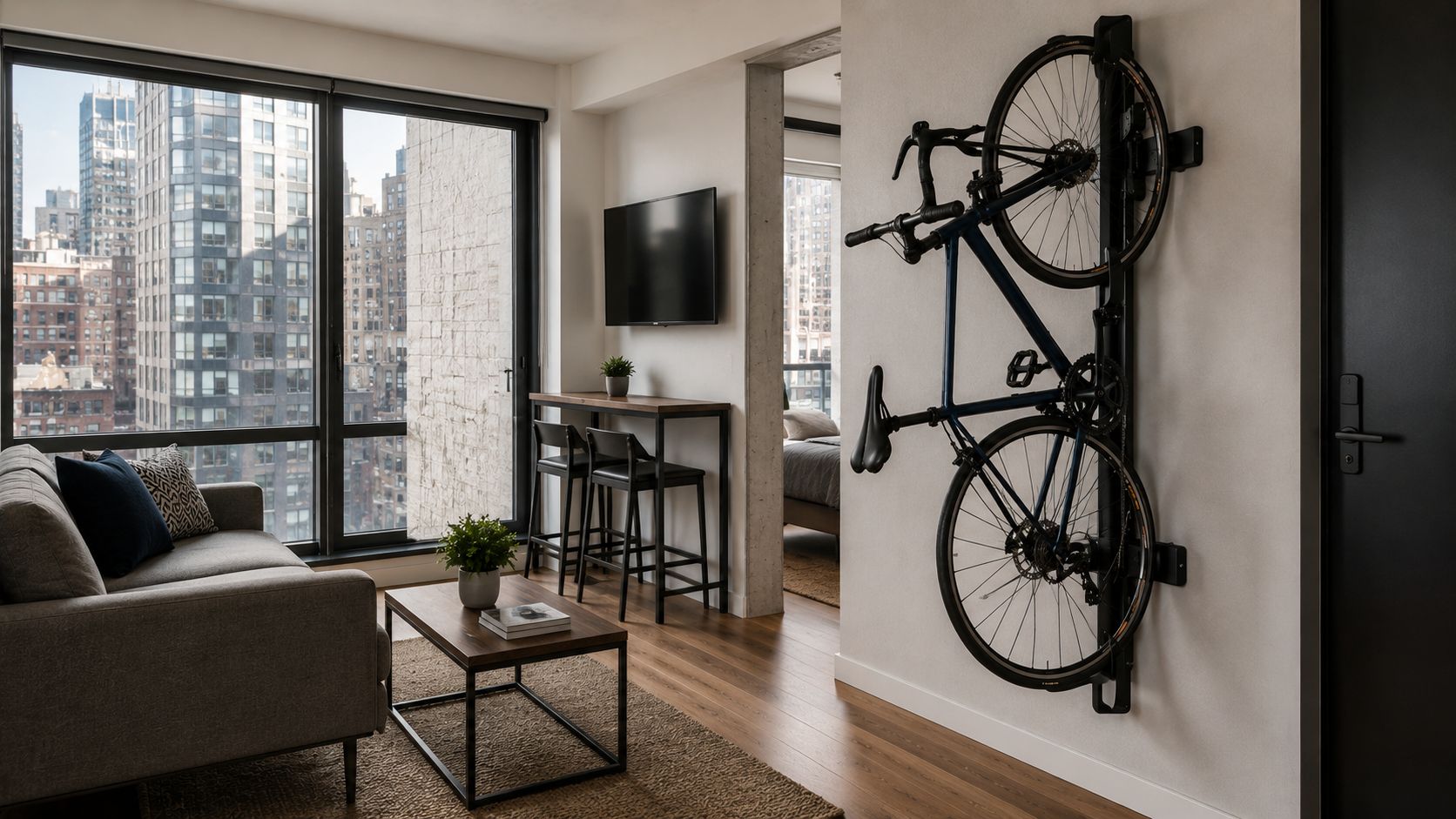
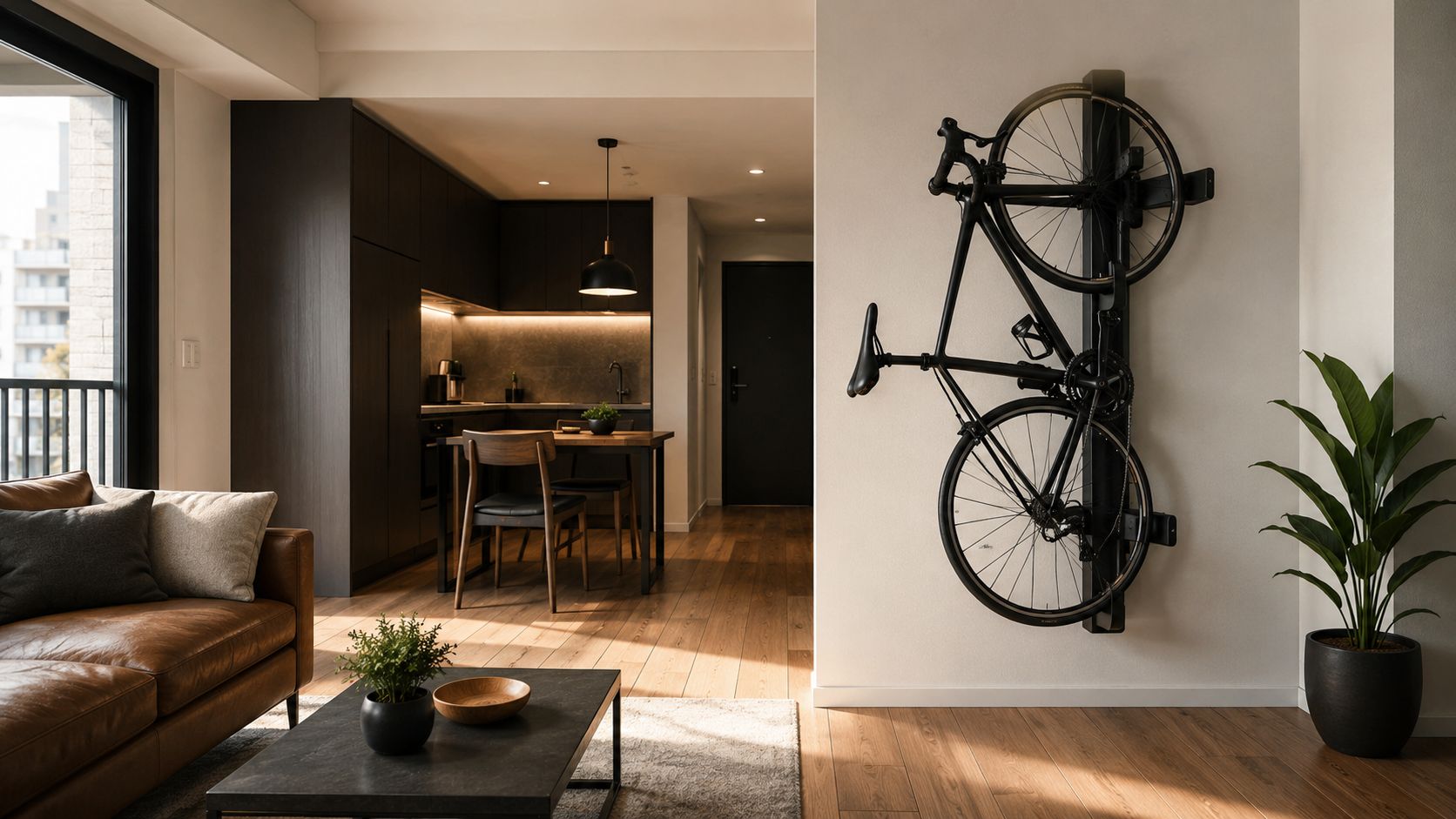
Vertical bike racks play a major role in this design shift because they turn bicycles into wall-mounted display elements. A sleek road bike hanging vertically against a clean wall can create a modern, architectural appearance that feels intentional rather than cluttered.
Manufacturers have recognized this trend and now produce vertical racks in a wide range of finishes and styles. Matte black steel frames, natural wood accents, minimalist floating mounts, and industrial-inspired systems allow renters and homeowners to match bike storage with existing décor. Some racks are designed so discreetly that they resemble sculptural wall pieces rather than storage equipment.
This blend of practicality and aesthetics is particularly appealing in apartments where rooms often serve multiple purposes. Living rooms may double as home offices, dining areas may merge with workout spaces, and entryways may need to function as storage zones. Vertical bike racks help maintain visual cleanliness while integrating seamlessly into the surrounding environment.
The popularity of social media and apartment lifestyle content has also accelerated interest in stylish bike storage. Minimalist apartments featuring neatly displayed bicycles have become common in urban design inspiration, reinforcing the idea that efficient storage can also elevate the look of a home.
Choosing the Right Vertical Bike Rack for Your Apartment
Not all vertical bike racks are designed the same way, and selecting the right option depends heavily on the size of the apartment, the type of bicycle, and the building’s wall structure. Understanding these factors can help apartment residents choose a storage system that balances convenience, safety, and style.
Wall-mounted vertical racks are among the most common options because they maximize stability while minimizing footprint. These systems typically hold the bike by one wheel while allowing the frame to rest vertically against the wall. Many modern wall-mounted racks include rubberized contact points to protect wheel rims and wall surfaces from scratches.
Freestanding vertical racks are another popular choice, particularly for renters who cannot drill into walls. These racks use tension poles or floor-supported frames to hold the bike upright without permanent installation. They are especially useful in apartments with strict lease agreements or concrete walls that make mounting difficult.
Some vertical systems are designed for multiple bikes, making them ideal for couples or roommates sharing small apartments. These dual-bike configurations stagger the bicycles vertically to reduce overlap while maintaining easy access.
Weight capacity is another critical factor. Standard vertical racks work well for lightweight road bikes and hybrid bicycles, but heavier mountain bikes and electric bikes require reinforced systems with higher load ratings. Apartment dwellers should always confirm the rack’s maximum supported weight before installation.
Wheel size compatibility also matters. Certain racks are optimized for narrow road tires, while others accommodate wider mountain bike wheels or fat bikes. Adjustable mounting arms and wheel cradles provide greater flexibility for households with different bike styles.
Apartment residents should also think carefully about placement. Entryways are common locations because they allow quick access for commuting, but living rooms, hallways, and spare corners can also work well. The ideal location provides easy lifting clearance while keeping the bike secure and out of high-traffic pathways.
Installation Tips for Apartment-Friendly Bike Storage
Installing a vertical bike rack correctly is essential for both safety and long-term durability. A poorly mounted rack can damage walls, compromise bike stability, or even create safety hazards inside the apartment. Fortunately, most modern systems are designed with apartment users in mind and can be installed efficiently with basic tools.
Wall-mounted racks should always anchor into studs whenever possible. Drywall alone may not support the full weight of a bicycle over time, especially with heavier bikes. Stud finders, mounting templates, and heavy-duty hardware help ensure secure installation while minimizing wall damage.
For renters concerned about lease restrictions, removable mounting solutions and freestanding systems provide excellent alternatives. Tension-mounted racks that extend between the floor and ceiling are particularly attractive because they require no drilling while still offering strong support.
Protecting walls is another important consideration in small apartments. Many vertical racks include wheel trays, bumpers, or wall guards that prevent tire marks and frame scuffs. These small protective features can preserve paint and reduce maintenance costs when moving out.
Ceiling height also influences installation decisions. Apartments with higher ceilings allow more flexibility for vertical storage angles, while low ceilings may require compact upright systems designed specifically for tight spaces. Measuring carefully before purchasing a rack can prevent frustrating installation issues later.
Apartment residents should also consider daily usability. A rack may save space beautifully, but if lifting the bike feels awkward every day, it can become inconvenient quickly. Adjustable mounting heights and angled loading systems can significantly improve ease of use, especially for commuters using their bikes frequently.
Lighting placement matters as well. A vertically stored bike positioned near windows or lamps can create attractive visual depth within the room while making the storage area feel integrated into the apartment’s design rather than hidden away.
Creating a Functional Urban Lifestyle Around Bike Storage
Vertical bike racks do more than save space. They support an entire urban lifestyle centered around convenience, mobility, and organization. In many cities, bikes are replacing cars for short commutes, grocery trips, and recreational transportation. Apartment residents increasingly build their routines around cycling, making efficient bike storage essential to daily life.
A well-designed vertical storage setup encourages more frequent bike use because the bicycle remains accessible and organized. Riders can grab the bike quickly for work commutes or spontaneous evening rides without navigating cluttered storage areas or shared apartment garages.
For fitness enthusiasts, visible bike storage can also serve as motivation. Having a bicycle displayed prominently within the home reinforces healthy habits and encourages consistent activity. Instead of being hidden away, the bike becomes part of the apartment’s daily environment and identity.
Vertical racks can also integrate with broader storage systems. Many apartment dwellers pair bike racks with shelves, hooks, cabinets, or storage benches to create multifunctional organization zones. Helmets, shoes, pumps, water bottles, and repair tools can all fit neatly around the bike storage area without overwhelming the room.
This integrated approach is particularly valuable in compact apartments where storage must remain highly efficient. Combining cycling gear organization with stylish furniture and clean layouts allows residents to maintain a calm and uncluttered atmosphere despite limited square footage.
The emotional effect of organized living should not be underestimated either. Cluttered apartments often feel smaller and more stressful, while thoughtful storage systems create openness and visual clarity. Vertical bike racks contribute directly to this sense of order and intentional design.
Vertical Bike Racks and the Future of Urban Housing
As urban populations continue growing, small-space living will likely become even more common in cities around the world. Developers are increasingly designing apartments with compact layouts, flexible interiors, and shared amenities rather than oversized private storage areas. This shift means residents will need smarter organization systems than ever before.
Vertical bike racks align perfectly with this future because they maximize functionality without requiring additional square footage. In dense urban housing markets where rent prices continue climbing, efficient storage solutions become essential lifestyle tools rather than optional accessories.
The growth of micro-apartments and compact city living has already fueled demand for modular furniture, foldable workstations, and multifunctional storage systems. Vertical bike storage fits naturally into this movement by transforming unused wall space into practical infrastructure.
Sustainability trends are also contributing to the popularity of vertical bike racks. Cities worldwide are investing heavily in cycling infrastructure to reduce traffic congestion and environmental impact. As more residents choose bikes over cars, apartment-friendly storage systems will become increasingly important.
Future bike storage designs may integrate even more technology and adaptability. Smart racks with integrated charging systems for e-bikes, modular wall panels, and customizable storage ecosystems are already beginning to appear in modern product lines. These innovations suggest that vertical bike storage will continue evolving alongside changing urban lifestyles.
Interior designers and architects are also paying greater attention to bike integration within residential spaces. Some modern apartments now include dedicated bike storage alcoves, reinforced mounting zones, or flexible entryway layouts designed specifically for cyclists. This reflects a growing recognition that bikes are no longer niche recreational equipment but essential urban transportation tools.
Turning Small Apartments Into Efficient Cycling Spaces
Living in a small apartment no longer means sacrificing bike ownership or settling for cluttered interiors. Vertical bike racks have transformed the way urban residents approach storage, making it possible to combine cycling lifestyles with clean, organized, and visually appealing living environments. What makes vertical bike storage so compelling is its ability to solve multiple challenges simultaneously. It saves space, protects bicycles, improves organization, enhances interior design, and supports modern urban mobility. Few apartment storage solutions offer such a balanced combination of practicality and aesthetics. For commuters, fitness enthusiasts, weekend adventurers, and city cyclists alike, vertical bike racks create a more seamless relationship between the home and the ride. Instead of treating the bike as an inconvenient object that competes for space, these systems integrate it directly into the architecture of daily living. As apartments continue shrinking and cycling continues growing, vertical bike racks will likely become a standard feature in urban homes around the world. Their rise reflects a broader cultural shift toward smarter living, intentional organization, and sustainable transportation. In the end, the best apartment storage solutions are the ones that improve both functionality and quality of life. Vertical bike racks accomplish exactly that by helping people reclaim valuable space while celebrating the freedom and energy that cycling brings into modern living.