Cities are growing faster than ever before. Apartment buildings are becoming taller, streets are becoming busier, and living spaces are shrinking as urban populations continue to rise. In many modern cities, every square foot matters. Residents constantly search for ways to maximize efficiency while maintaining comfort, organization, and mobility. At the same time, cycling has surged in popularity as people embrace healthier lifestyles, eco-friendly transportation, and alternatives to crowded roads and public transit systems. These two trends have collided in fascinating ways. More people own bicycles, but fewer people have traditional storage space. Garages are rare in dense city environments, apartments are compact, and shared building storage areas are often overcrowded or insecure. As a result, urban residents have turned to one of the smartest space-saving innovations in modern cycling culture: vertical bike racks.
A: They store bikes upright against a wall, using vertical height instead of valuable floor space.
A: Yes, they are one of the most practical storage options for apartments, condos, and small city homes.
A: Yes, vertical racks are commonly used in shared building bike rooms to increase storage capacity.
A: They can if installed poorly, but wheel trays, wall guards, and proper mounting help prevent damage.
A: Some require lifting, but pivoting racks and low-lift designs make daily use much easier.
A: Only certain heavy-duty models can. Always check the rack’s weight rating first.
A: Freestanding, leaning, or tension-style racks are usually best because they avoid permanent wall drilling.
A: It depends on handlebar width, rack angle, and whether the racks are staggered or pivoting.
A: They can be safe when properly anchored, spaced, inspected, and paired with secure locking points.
A: Pivoting wall-mounted racks usually save the most usable aisle space in tight urban storage areas.
Why Traditional Bike Storage Fails in Dense Urban Environments
Traditional bike storage methods were never designed for modern urban density. In suburban homes with garages and basements, bikes could simply lean against walls or sit in spacious storage areas without causing major problems. Urban living is entirely different. Space limitations force residents to think more strategically about every object inside their homes and buildings.
When bicycles are stored horizontally on apartment floors, they quickly become obstacles. They block entryways, clutter hallways, reduce usable living areas, and create frustration in already compact spaces. In many studio apartments, a single bike can dominate an entire corner of the room, making the environment feel cramped and disorganized.
Shared residential buildings face similar issues. Bike rooms often become chaotic because traditional floor storage limits capacity. Bikes overlap, handlebars tangle together, and residents struggle to maneuver through crowded storage spaces. This inefficient layout wastes valuable square footage while making access inconvenient.
Commercial spaces and offices encounter the same challenge as more employees commute by bike. Businesses that encourage cycling often discover that standard bike parking consumes too much indoor storage space. Retail stores, coworking spaces, and apartment complexes need smarter systems capable of handling higher bicycle volumes without sacrificing functionality.
Urban infrastructure itself also contributes to the problem. Narrow hallways, elevators, stairwells, and compact apartments make moving and storing bikes more difficult than ever before. Traditional storage simply cannot keep up with the realities of modern city life.
Vertical bike racks emerged specifically because cities needed a more efficient solution. By taking advantage of vertical space rather than floor area, these systems address the unique challenges created by urban density while improving the experience of bike ownership.
How Vertical Bike Racks Transform Small Spaces
The brilliance of vertical bike racks lies in their ability to use space that would otherwise remain unused. Most rooms and storage areas have significant vertical wall space that serves little purpose in traditional layouts. Vertical racks transform these blank surfaces into highly functional storage systems.
Instead of spreading bicycles outward across the floor, vertical racks position bikes upright using wall-mounted hooks, wheel trays, freestanding supports, or tension-based systems. This dramatically reduces the amount of floor space required for each bike while creating cleaner, more organized environments.
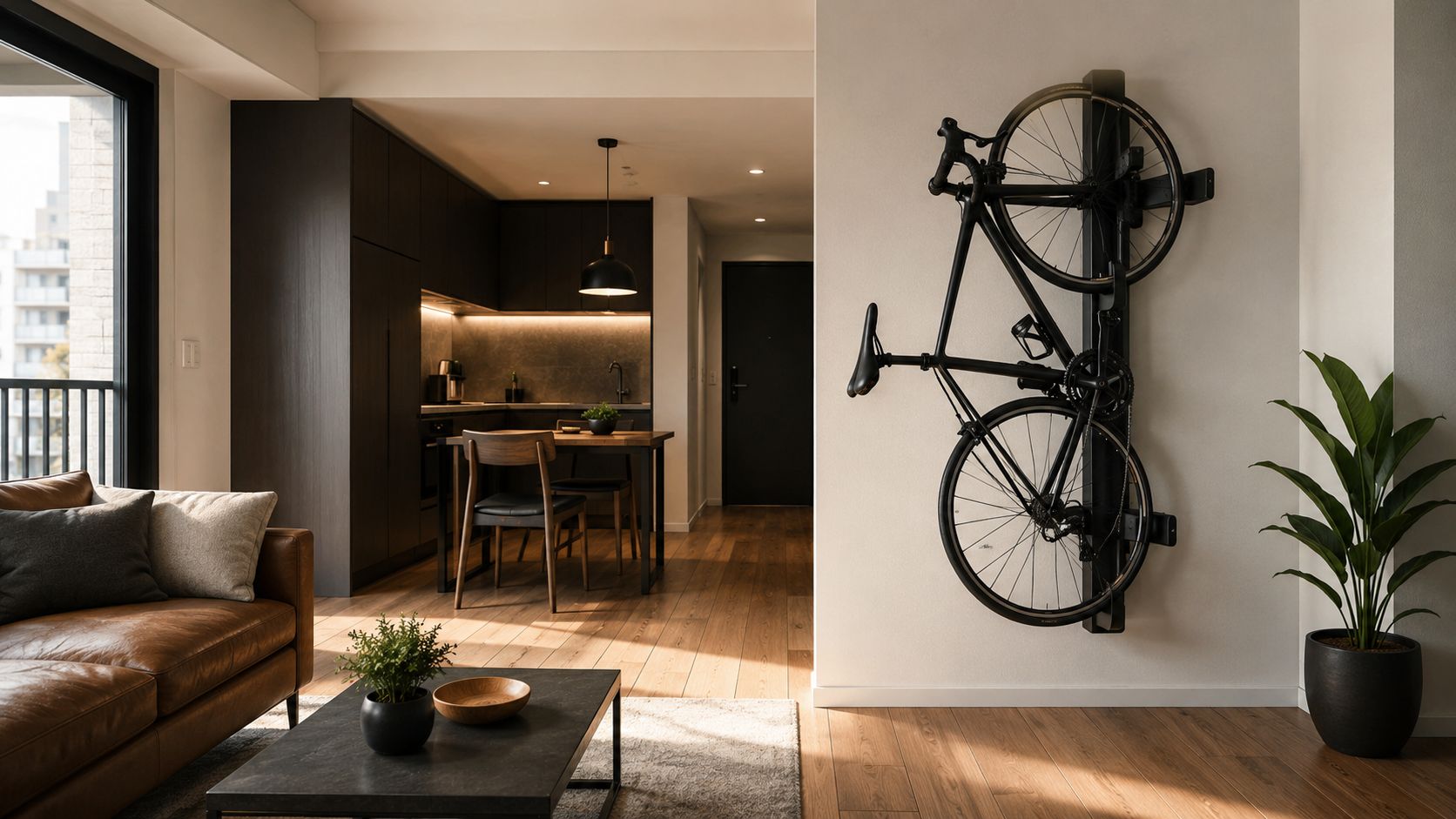
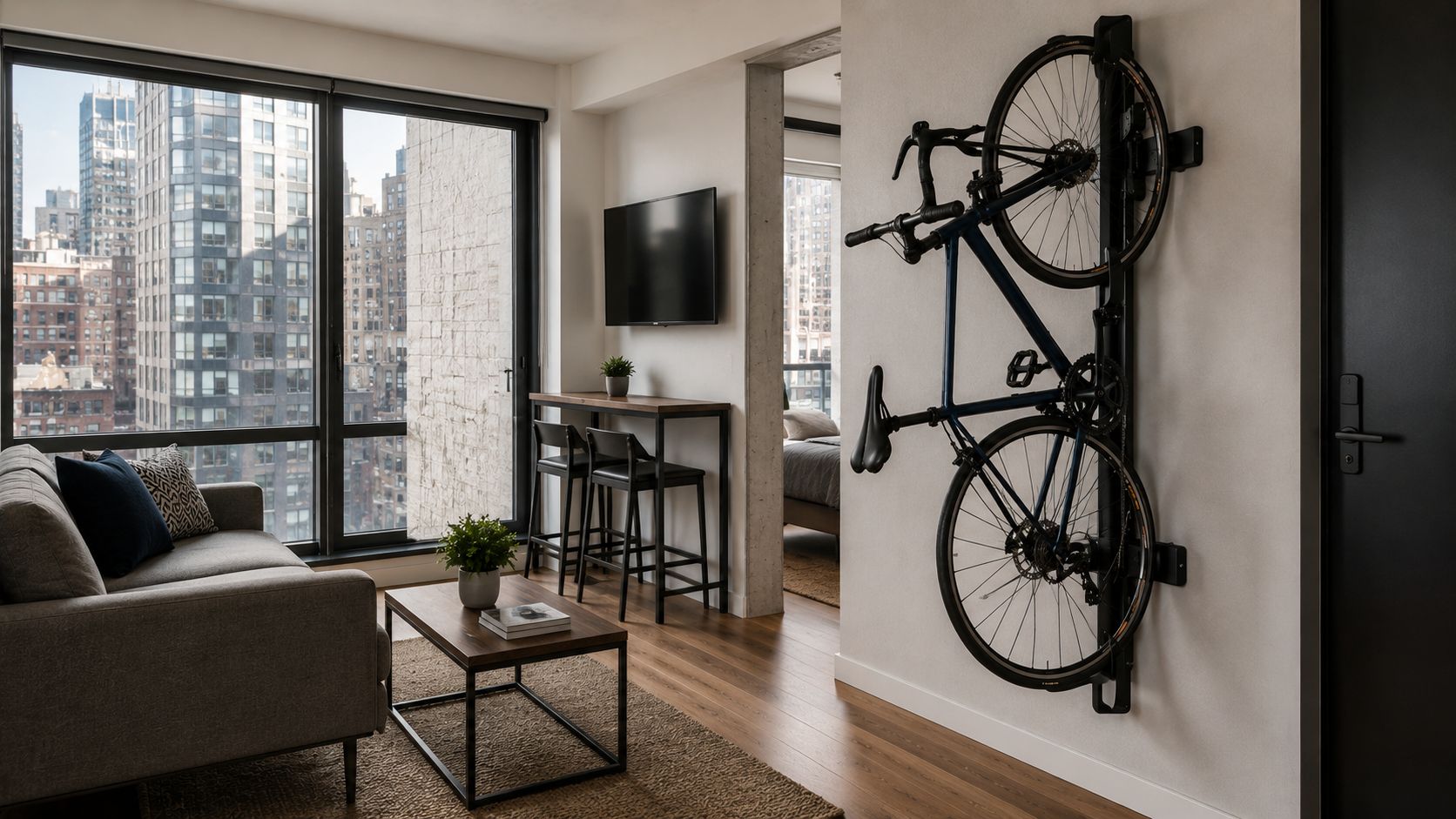
In apartments, this transformation can feel almost immediate. A bike that once occupied a large section of the living room suddenly becomes a compact vertical feature against the wall. Walkways open up, furniture placement becomes easier, and the apartment feels significantly larger.
The same efficiency applies to shared bike storage rooms. Buildings that switch from floor-based storage to vertical systems can often double or even triple their bicycle capacity within the same footprint. This is especially valuable in urban residential developments where bike ownership continues increasing every year.
Vertical racks also improve accessibility. Organized vertical layouts make it easier for residents to retrieve bikes quickly without navigating tangled handlebars or crowded aisles. Many modern systems are designed with ergonomic loading angles that simplify lifting and storing even larger bicycles.
Beyond functionality, vertical bike racks also improve visual organization. Clutter creates psychological stress and makes spaces feel smaller than they actually are. By consolidating bike storage into clean vertical arrangements, these systems create more open, breathable environments that feel calmer and more intentional.
The Role of Vertical Bike Racks in Sustainable Urban Living
Cities worldwide are encouraging cycling as a major part of future transportation systems. Traffic congestion, environmental concerns, and rising transportation costs have pushed governments and urban planners to invest heavily in bike infrastructure. Protected bike lanes, public bike-sharing programs, and cyclist-friendly city planning are becoming increasingly common.
However, transportation infrastructure alone is not enough. If residents cannot store bikes conveniently at home or work, cycling adoption becomes more difficult. Vertical bike racks play a surprisingly important role in supporting sustainable urban transportation because they remove one of the biggest barriers to bike ownership: storage limitations.
Apartment residents who previously avoided buying bikes due to space concerns now have practical storage solutions that fit compact living environments. Office buildings can support more cycling commuters by installing efficient vertical bike systems in smaller storage areas. Public bike parking facilities can maximize capacity without expanding their footprint.
This efficiency becomes especially important in high-density cities where land is extremely valuable. Every square foot dedicated to parking or storage carries economic and spatial consequences. Vertical bike racks allow cities to support more cyclists while using less physical space.
Cycling itself also reduces pressure on urban infrastructure. Fewer cars mean reduced traffic congestion, lower emissions, and less demand for expensive parking structures. Vertical bike racks indirectly contribute to these broader urban sustainability goals by making cycling more practical for everyday residents.
As cities continue shifting toward greener transportation systems, compact and efficient bike storage will become increasingly essential. Vertical racks represent more than just convenient apartment accessories. They are part of a larger movement toward smarter, more sustainable urban living.
Modern Design Meets Functional Bike Storage
One of the most interesting developments in vertical bike storage is the growing connection between functionality and interior design. In the past, bike storage often looked industrial, bulky, or purely utilitarian. Modern vertical bike racks have evolved far beyond that image.
Today’s systems are designed to complement contemporary interiors while still delivering excellent functionality. Sleek metal frames, minimalist wall mounts, natural wood finishes, and modular storage designs allow bike racks to blend seamlessly into urban apartments and offices.
In many modern homes, bicycles are no longer hidden away. They are displayed intentionally as part of the room’s design aesthetic. A premium road bike mounted vertically on a clean wall can resemble modern art as much as storage equipment. This design-driven approach has helped normalize bike ownership in smaller urban spaces where visual appearance matters greatly.
Manufacturers now create racks specifically for different interior styles. Minimalist apartments may favor simple matte-black wall hooks, while industrial lofts may incorporate exposed steel systems with architectural details. Scandinavian-inspired interiors often feature warm wood finishes that soften the appearance of bike storage.
This shift has helped vertical bike racks gain popularity beyond hardcore cycling communities. People who care deeply about apartment aesthetics now view bike storage as part of interior organization and lifestyle design rather than a necessary compromise.
The rise of social media has amplified this trend even further. Images of clean urban apartments with beautifully mounted bicycles have become symbols of modern city living. Vertical bike racks fit naturally into this aspirational lifestyle because they combine efficiency, organization, mobility, and style in a single solution.
Commercial Buildings and Public Spaces Embrace Vertical Storage
Vertical bike racks are not limited to residential apartments. Commercial buildings, public facilities, universities, and office spaces increasingly rely on these systems to manage growing numbers of cyclists in dense environments.
Corporate offices that encourage cycling commuters often face serious storage challenges. Traditional bike parking consumes large amounts of floor space, especially in buildings located within crowded urban centers. Vertical racks allow companies to provide secure bike parking while minimizing storage footprints.
Universities and campuses also benefit significantly from vertical systems. Student populations often rely heavily on bicycles, yet campus storage space is limited. Organized vertical storage areas help schools maximize capacity while improving accessibility and reducing clutter.
Public transportation hubs are another important example. Train stations and transit centers increasingly integrate bike-friendly infrastructure to support multimodal commuting. Vertical bike storage systems help transit facilities accommodate larger numbers of bicycles without requiring major expansions.
Fitness centers, coworking spaces, and retail developments have also embraced vertical racks as cycling culture continues expanding. Businesses recognize that providing efficient bike storage attracts urban customers and supports environmentally conscious branding.
Many cities are even incorporating vertical systems into municipal planning strategies. Smart storage solutions help public facilities manage bike demand more effectively while reducing overcrowding in urban environments.
This widespread adoption demonstrates how valuable vertical bike racks have become in modern cities. They are no longer niche products designed solely for cyclists with small apartments. They are now essential infrastructure tools that help cities function more efficiently.
Innovations Shaping the Future of Vertical Bike Storage
The future of vertical bike storage looks increasingly sophisticated as technology, urban design, and cycling culture continue evolving together. Manufacturers are developing new systems that improve convenience, adaptability, and efficiency for modern city environments.
One major trend is the rise of modular storage systems. Instead of fixed single-bike racks, newer designs allow users to customize layouts based on changing storage needs. Apartment residents, office managers, and property developers can expand or reconfigure systems as bicycle ownership increases.
Electric bikes are also shaping future rack design. E-bikes tend to be heavier and larger than traditional bicycles, requiring reinforced vertical systems capable of supporting greater weight safely. Manufacturers are responding with stronger mounting systems and ergonomic loading mechanisms.
Smart technology integration is another emerging development. Some advanced bike storage systems now include integrated locking mechanisms, app connectivity, security monitoring, and even charging capabilities for electric bikes. These innovations align with the broader trend toward smart urban infrastructure.
Architects and developers are also beginning to design buildings with bike storage integration in mind from the earliest planning stages. New apartment complexes increasingly include dedicated cycling zones with vertical storage systems already built into the structure. This reflects a major cultural shift in how cities view bicycle transportation.
As urban density continues increasing, storage efficiency will become even more important. Vertical bike racks are likely to evolve from optional accessories into standard features within many residential and commercial buildings.
Reclaiming Urban Space Through Smarter Bike Storage
Cities are constantly searching for ways to use space more intelligently. Every hallway, apartment corner, storage room, and public facility carries enormous value in dense urban environments. Vertical bike racks represent one of the simplest yet most effective solutions for reclaiming wasted space while supporting modern transportation needs. Their impact extends far beyond convenience. Vertical racks help apartments feel larger, improve organization, increase building storage capacity, support sustainable transportation, and contribute to cleaner urban environments. They solve practical problems while enhancing the overall quality of urban living. What makes vertical bike storage especially powerful is its versatility. These systems work in tiny studio apartments, large residential complexes, office buildings, public transit hubs, universities, and commercial facilities alike. Few storage solutions offer such broad functionality across so many different urban environments. As cycling continues growing worldwide, efficient storage will become increasingly critical to city planning and apartment living. Vertical bike racks provide a scalable, adaptable, and visually appealing answer to one of urban life’s most common challenges. In many ways, they symbolize the future of urban design itself. Modern cities must become smarter, more flexible, and more efficient in how they use limited space. Vertical bike racks embody that philosophy perfectly by transforming overlooked wall areas into practical infrastructure that improves both mobility and daily living. For urban residents searching for ways to balance compact living with active lifestyles, vertical bike racks are more than storage systems. They are tools that make modern city life cleaner, simpler, and far more functional.