A bench is more than a place to sit — it’s an invitation. The perfect park bench turns a patch of grass into a pause in someone’s day, a meeting point into a moment, and an otherwise ordinary landscape into a place that welcomes lingering. Choosing the right bench for your space requires more than picking a pretty silhouette; it blends function, material science, human comfort, context-sensitive design, and long-term stewardship. This guide walks you through every decision point — from the first inspiration to the last coat of protective finish — so you select a bench that looks right, performs well, and becomes an effortless part of the place you care for.
A: Recycled HDPE and stainless steel hardware require the least routine maintenance; premium hardwoods last long but need periodic care.
A: Paths often use 4–5 ft benches for short rests; plazas benefit from longer 6–8 ft benches or modular runs to accommodate groups.
A: Use removable benches for event flexibility; permanent anchors are best for high-vandalism or permanent installations.
A: Armrests aid seniors and people with mobility challenges and can help deter long-term lying—balance inclusivity with local policy needs.
A: Donor programs offset purchase costs but ensure they include maintenance and long-term replacement terms.
A: Orient for views, shelter from prevailing winds, sun/shade balance, and sightlines toward active areas for perceived safety.
A: Yes—keeping spare slats, common fasteners and a tamper-resistant bolt kit reduces downtime and repair costs.
A: Depends on material—wood often needs attention every 1–3 years; powder-coated metals may last 5–10+ years before touch-up is needed.
A: Design strategies (armrests, segmented seating) combined with outreach and services are more humane and effective than hostile design alone.
A: Coordinate with parks/public works, landscape architects, paving contractors and accessibility specialists to ensure correct siting, anchors and code compliance.
What Is Your Bench For? Defining Purpose Before Design
Start with purpose. Is the bench meant for fleeting bus-stop rests, contemplative riverside sitting, playground supervision, or heavy-use urban plazas? A bench intended for a quiet botanical garden prioritizes comfort, aesthetic integration, and smaller scale. A bench for a transit hub demands vandal-resistant materials, easy cleaning, and quick turnover of users. Think about the primary and secondary functions: will it double as a social perch for groups, provide armrests and back support for older visitors, or offer integrated planters or bike racks? Clarifying purpose guides the rest of the process — it narrows material options, defines size, and influences placement. Resist the temptation to choose solely by appearance; the best designs marry utility to style so form follows function without sacrificing character.
Material Matters: Choosing Metals, Wood, or Composite
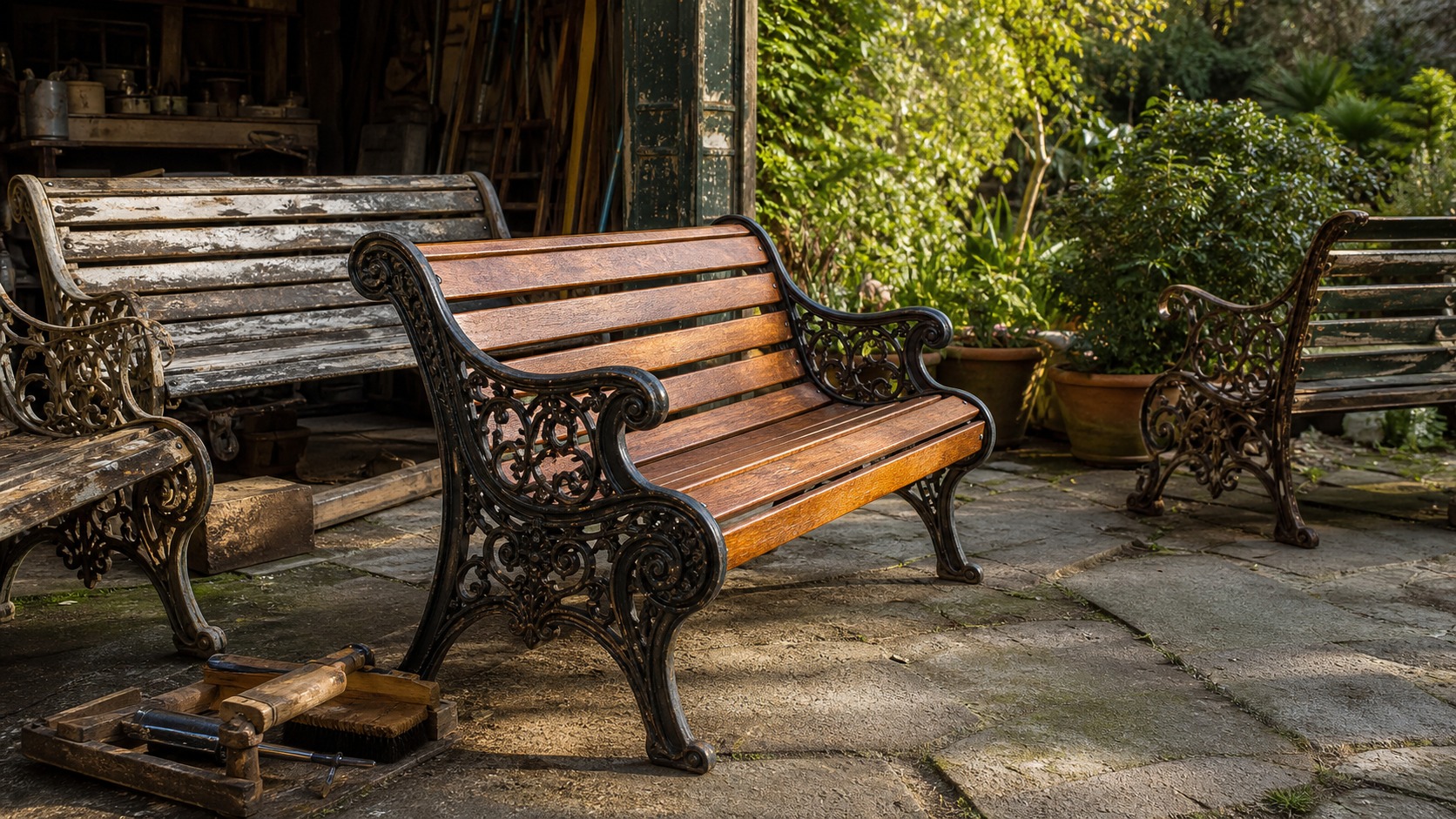
Materials predetermine a bench’s lifespan, maintenance needs, and visual language. Cast iron and steel convey a classic, durable presence and are ideal where strength and permanence are priorities; they perform well in urban environments but require protective coatings to resist corrosion.
Aluminum offers rust-free benefits and a lighter footprint for movable benches, while stainless steel provides modern sheen and longevity at a higher cost. Traditional hardwoods like teak and Ipe deliver warm, tactile comfort and age gracefully if maintained, but they need treatment in wet climates and can be targeted by pests. Recycled plastic lumber and composite blends are low-maintenance, resistant to rot and insects, and come in many colors and finishes; they can mimic wood without the upkeep.
For community installations where environmental impact matters, consider reclaimed wood or benches constructed from recycled metal — sustainable choices increasingly popular for parks, campuses, and eco-conscious developments. Match the material to the expected use, local climate, and the look you want to achieve.
Size and Scale: Fitting the Bench to the Landscape
A bench should sit comfortably within its surroundings without overwhelming or being swallowed by them. Scale considerations include bench length, height, and depth. Typical bench seating runs from four to six feet for two to three people; longer benches create social seating but can feel less intimate. Seat height commonly falls between 16 and 18 inches for universal comfort, while seat depth around 16 to 20 inches balances support and ease of standing. Equally important is spatial scale: in narrow pathways, a slim bench or back-to-back seating maintains circulation, while a broad lawn can handle larger, more sculptural pieces or groupings. Visual scale is critical too — choose proportions that echo nearby architecture and landscape features so the bench looks like it belongs. If in doubt, place a mock-up or temporary seating to test sightlines, pedestrian flow, and human interaction before committing.
Comfort and Ergonomics: Designing for Human Use
Even the most beautiful bench fails if it’s uncomfortable. Ergonomics determine whether people stay a few minutes or an hour. A gently contoured seat and slightly reclined backrest make extended sitting pleasurable. Slat spacing matters: narrow gaps provide better support while wider slats allow water drainage.
Armrests can significantly enhance usability — they offer leverage for standing, define personal space, and assist older visitors. Backrests should support the lumbar region without restricting movement; design with curves and angles that accommodate a range of body types. Pay attention to thermal comfort: metal benches can become searing hot in sun or icy in winter, so consider armrests, perforations, or wood accents to improve touchability. The best benches create an unselfconscious sense of ease — people don’t notice ergonomics when everything works.
Durability & Weather Resistance: Preparing for the Elements
Weather is the bench’s most relentless critic. Moisture, UV exposure, freeze-thaw cycles, and salt-laden air in coastal sites all accelerate wear. Protective strategies include powder-coating metal frames for corrosion resistance, selecting rot-resistant hardwoods like teak for wet climates, and using stainless fasteners with composite boards. For high-sun environments, UV-stable pigments and finishes prevent color fade. In cold climates, choose materials and joints tolerant of contraction and expansion; avoid trapped water pockets that freeze and fracture. Consider finishes that can be refreshed — a bench that accepts straightforward, periodic maintenance will outlast a “no-maintenance” solution that fails quickly. Design details matter too: sloped seat surfaces shed water, open slats prevent pooling, and raised legs reduce splash-back from nearby turf or puddles.
Accessibility and Regulations: Making Seats Inclusive
Inclusivity is non-negotiable. Your bench should comply with accessibility guidelines for public spaces so people of varied mobility can use it comfortably. Appropriate seat height, stable firm foundations, and the inclusion of armrests are all part of accessible seating. Where applicable, leave sufficient clear floor space nearby for wheelchair users and ensure paths to the bench are level and barrier-free.
In municipal contexts, check local ordinances for requirements about materials, tethering (to discourage theft), and approved placements near roadways or transit stops. Thoughtful design goes beyond compliance: choose benches that feel welcoming to all ages and abilities, and remember that a welcoming bench is a small, tangible expression of a community’s values.
Placement & Orientation: Let Sun, Sightlines, and Sociality Guide You
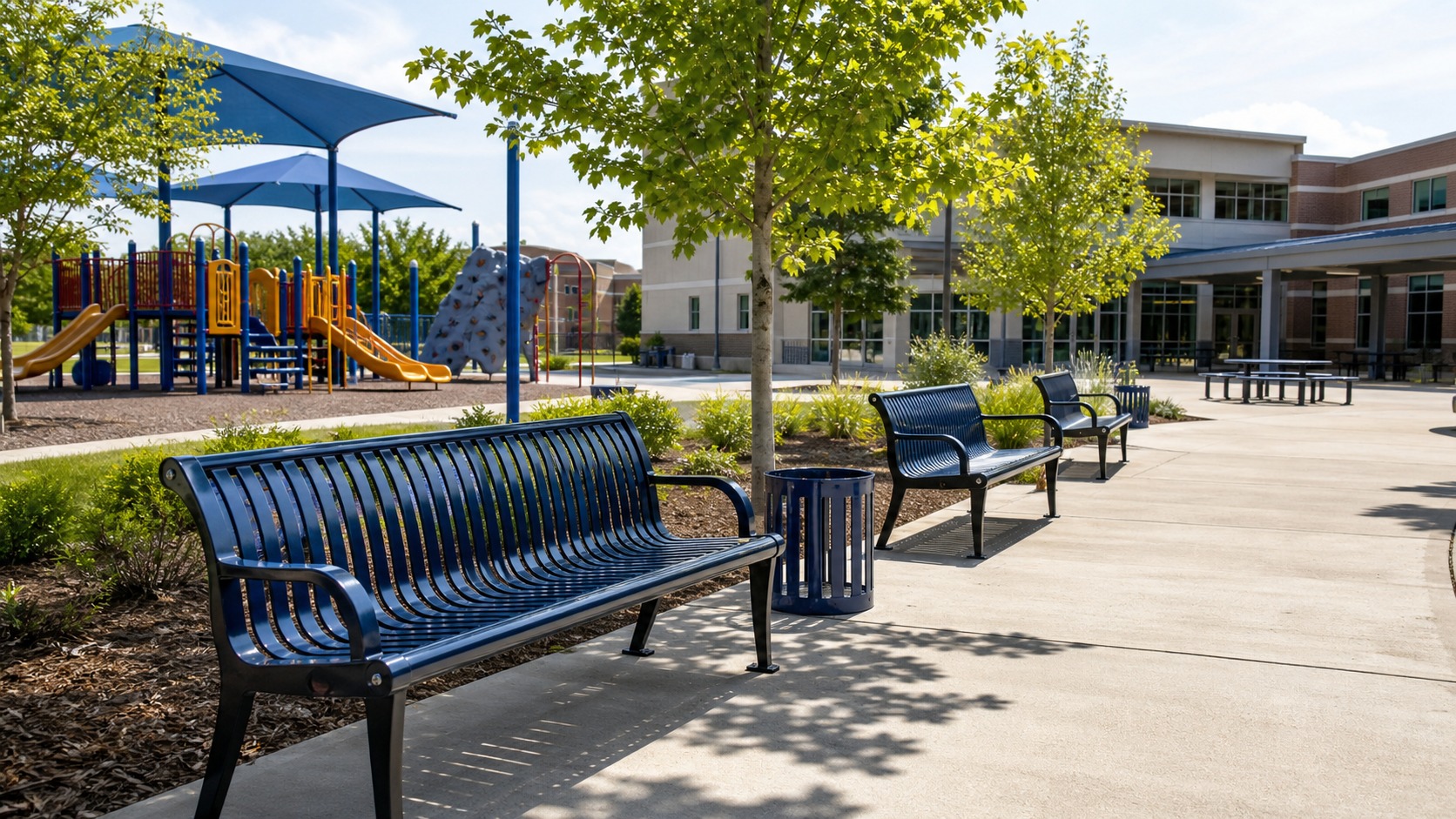
Where you place a bench determines how it will be used. Orientation toward scenic views, shade from trees, or proximity to playgrounds and paths frames the experience. Sun orientation affects thermal comfort; benches facing east catch morning light, while west-facing seats warm in the afternoon. Visibility to passersby supports safety and social inclusion, but secluded nooks offer quiet refuge. Consider acoustic context too: a bench near a water feature invites contemplation, while one near a sports field becomes an active perch for spectators. Group benches in pairs or small clusters to encourage conversation, or place single benches solo for solitude. Think beyond the bench itself: ground surface, nearby lighting, trash receptacles, and signage all influence how attractive and functional seating will be.
Installation, Anchoring, and Anti-theft Strategies
Proper installation protects investment. Permanent concrete footings anchor heavy benches securely and deter theft, while surface-mount hardware allows flexibility for future reconfiguration. In community settings where theft or vandalism is a concern, consider tamper-proof fasteners, welded frames, or bolted benches recessed into a concrete pad. Use drainage considerations during installation to avoid water pooling around legs, and set benches slightly elevated from grade to prevent rot or corrosion. If the bench includes extra features like built-in planters or solar lighting, coordinate electrical and irrigation needs before installation to avoid retrofits. Good installation is invisible: a bench that remains level, solid, and safe for years demonstrates careful forethought.
Sustainability is increasingly central to purchasing decisions. Reclaimed wood benches celebrate material history while reducing demand for new timber. Recycled plastic lumber diverts waste from landfills and offers low-maintenance durability with minimal finish inputs.
Look for vendors with transparent sourcing, low-VOC finishes, and the ability to recycle or refurbish at end-of-life. For urban projects, benches that double as planters or nesting habitats for pollinators can extend ecological value. Consider lifecycle impacts: a more expensive bench made from responsibly sourced and long-lasting materials often outperforms cheaper options that require replacement. Sustainable choices reflect environmental stewardship and can become a story you share with park visitors and stakeholders.
Budgeting Wisely: Cost vs. Value Over Time
Budgeting for benches requires balancing upfront costs with long-term value. Cheap, low-quality options may save money initially but cost more in replacements, repairs, and lost goodwill. Conversely, premium materials and custom fabrication increase capital expense but reduce maintenance and extend useful life. Factor in installation, protective finishes, warranties, and anticipated maintenance when comparing bids. Public procurement often prioritizes lifecycle cost analysis — calculate expected lifespan, yearly maintenance, and replacement intervals to reveal true value. Also budget for small but vital items: anchoring hardware, delivery, and site preparation. A modestly higher investment now can translate into decades of service and fewer headaches later.
Maintenance and Care: Keep Your Bench Looking Its Best
Maintenance protocols preserve aesthetics and safety. Clean benches regularly to remove debris and surface contaminants; treat wood periodically with oil or sealants where appropriate and recoat metal surfaces if powder-coating chips.
Inspect fasteners annually and replace corroded bolts; tighten slats and check for structural fatigue. For benches in salt-prone or heavily used areas, schedule more frequent surface treatments and consider sacrificial finishes that are easy to renew.
Document maintenance routines and create a simple log for custodial teams — proactive care prevents many costly failures. When a bench reaches the end of its expected useful life, prioritize repair or refurbishment over disposal whenever possible; a repaired bench often costs less and retains its character.
Style, Branding, and Community: Making the Bench Part of a Story
Benches can be subtle branding tools and storytelling devices. Materials, color palettes, and form language can echo nearby architecture or a neighborhood’s cultural identity. Customization options range from engraved plaques and donor recognition to artist-designed armrests or site-specific sculptural elements.
Community-driven design processes build ownership and reduce vandalism — involve local stakeholders in color selection, engraving content, or even a bench dedication ceremony. Public art benches can celebrate history while functional benches quietly reinforce place identity. Thoughtful design and narrative integration make seating feel intentional and meaningful, transforming a bench into a civic asset rather than an afterthought.
Buying Options: Off-the-shelf, Custom, or Fabricate Locally
Decide whether you want a standard catalog bench, a bespoke commission, or a local fabricator build. Off-the-shelf benches offer predictable costs, warranties, and rapid delivery. Custom pieces allow unique shapes, site-specific dimensions, and integrated features like solar lighting or storage, but require longer lead times and higher budgets. Local fabrication supports community businesses, enables easier maintenance and parts sourcing, and lends authenticity to the project. When evaluating suppliers, request references, material certifications, and warranty terms. Visit installations in person if possible to assess real-world performance. The right procurement path aligns with your timeline, budget, and design ambitions.
Making the Final Choice: A Checklist for Confidence
Before you finalize your purchase, run a quick checklist in your head: does the bench match its intended purpose and user profile? Is the material suitable for the climate and maintenance plan? Does the scale fit the site visually and spatially?
Are accessibility and safety requirements satisfied? Did you account for installation and future upkeep costs? Have stakeholders had a chance to give input? If the answers are yes, you’re ready. If not, reassess the most critical mismatches and refine them. A well-considered purchase reduces surprises and sets the stage for a bench that delights users for years.
Seats That Tell Stories: Your Bench, Your Place, Your People
Choosing the perfect park bench is part craft, part logistics, and wholly about people. It’s a decision that ripples through daily routines, creating small rituals — a morning coffee, an afternoon conversation, a place to read or watch clouds. When material wisdom meets ergonomic care, and when placement considers sun, sightlines, and safety, a bench becomes more than furniture; it becomes a fixture of community life. Take the time to choose with intention: the right bench will reward you with decades of quiet service, a thousand small moments of comfort, and the satisfaction that your space invites people to stop, sit, and stay awhile.